Our Story
The story of Estel Group is the story of a family, a region, and a uniquely Italian approach to smart design. Founded in 1937 by Alfredo Stella, the company is today led by President Alberto Stella, supported by his sons Massimo and Matteo. The name Estel comes from the acronym “Estensibile Stella,” inspired by the patented folding door from the 1950s, an innovation that made the company famous throughout Italy.
After years of experience in home furniture, in 1980 Estel entered the office world, bringing comfort, ergonomics, and attention to detail to workspaces. Today, Estel Group designs and creates advanced work environments that meet the needs of the modern workplace: Italian Smart Office.
1937
The Origins
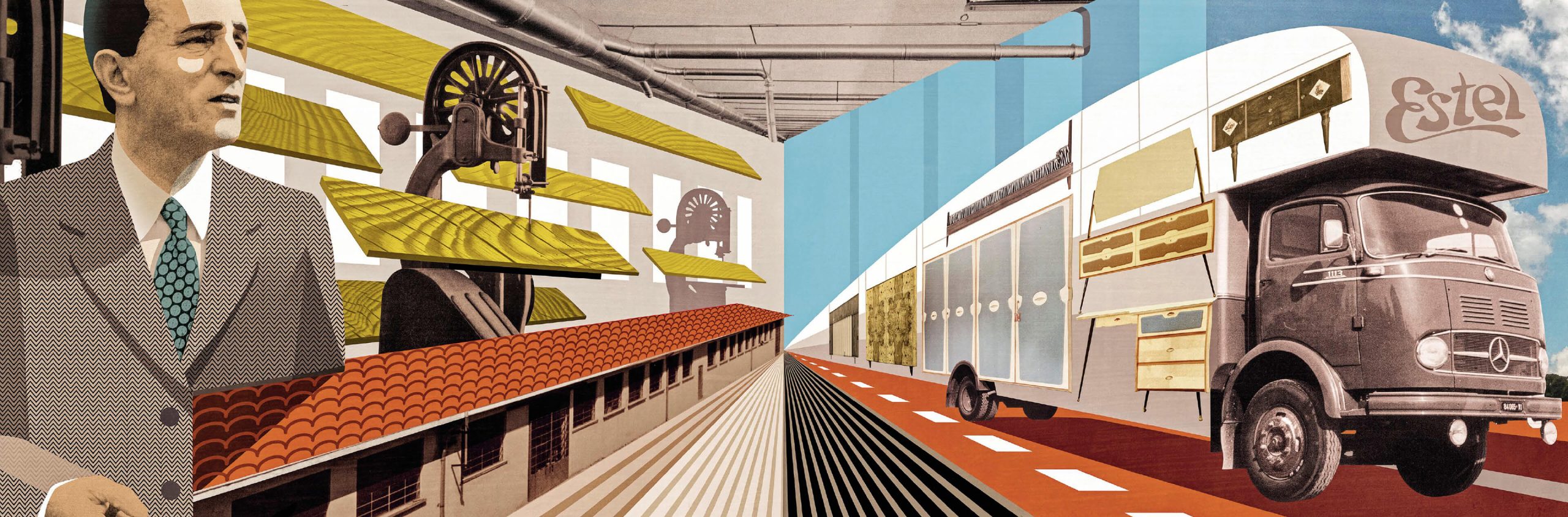
Estel was founded in 1937 by Alfredo Stella, who established Mobili Panforte Stella, a company that immediately stood out for its quality and innovation. The pioneering use of slatted panforte marked the first step in a journey dedicated to customization and artisanal excellence. Crafting bespoke furniture and focusing on details became the company’s DNA, driving its growth and establishing its reputation in furniture design.
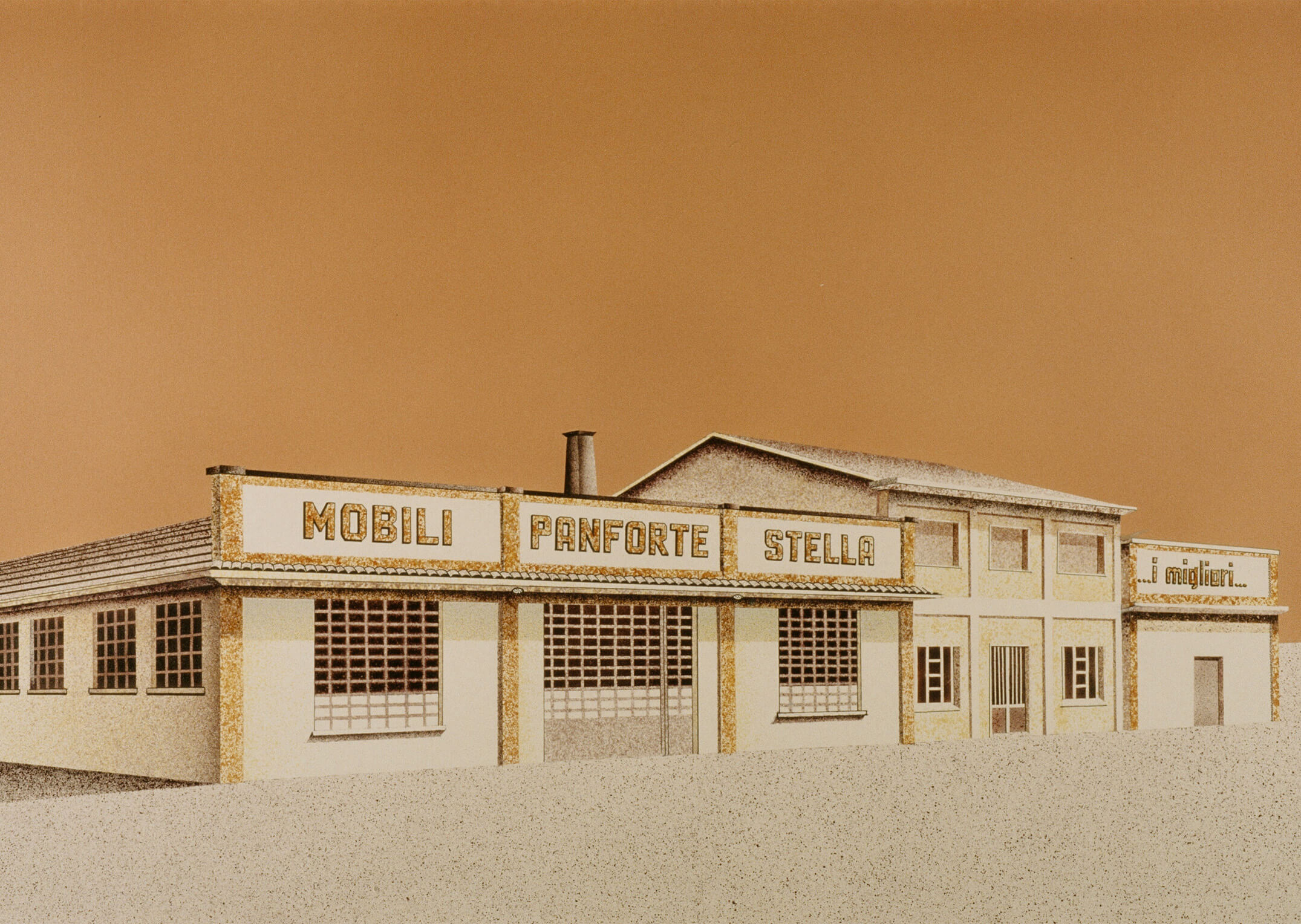
Drawing of the first Mobili Panforte Stella warehouses, with the claim “… the best…”
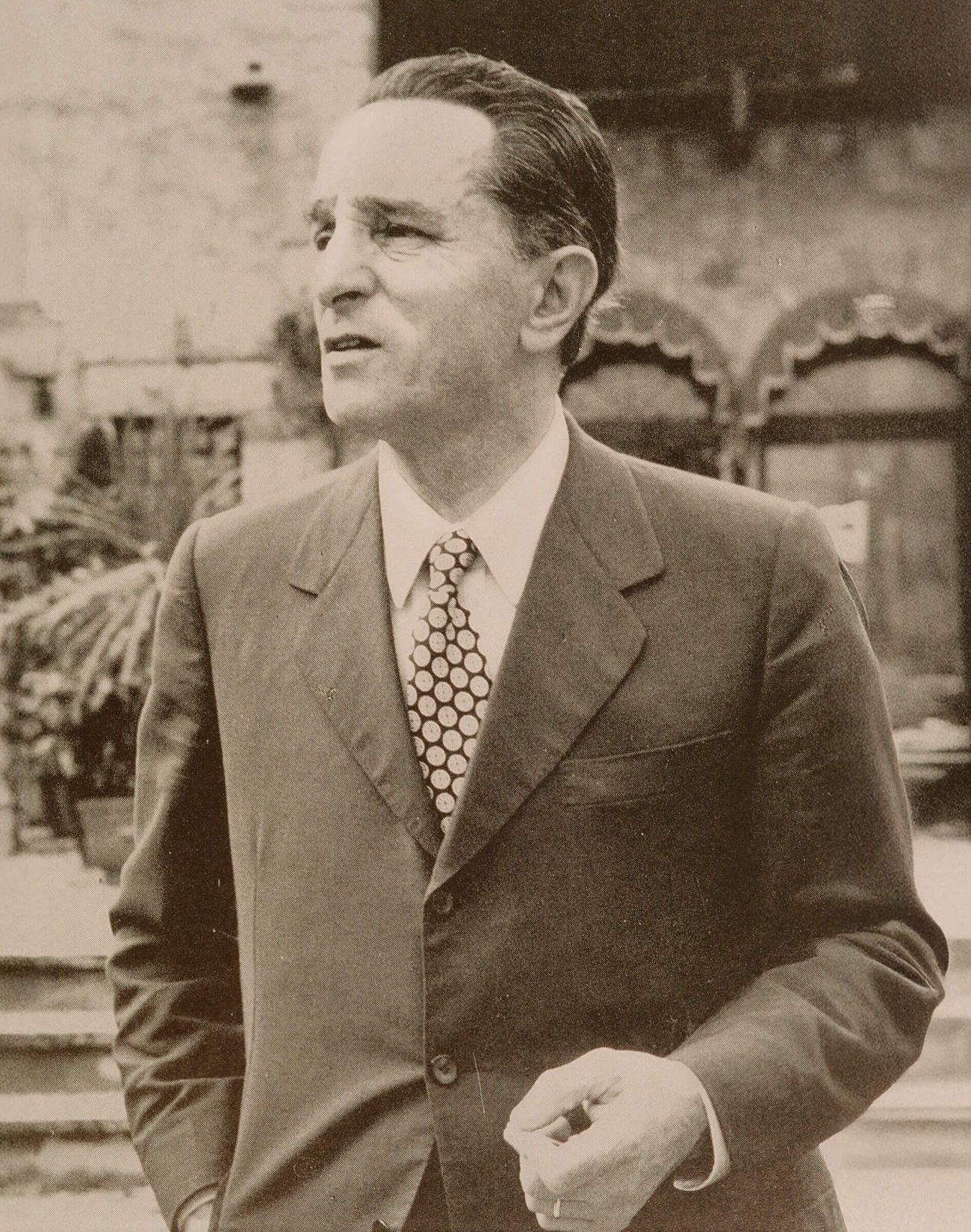
On the right: Alfredo Stella
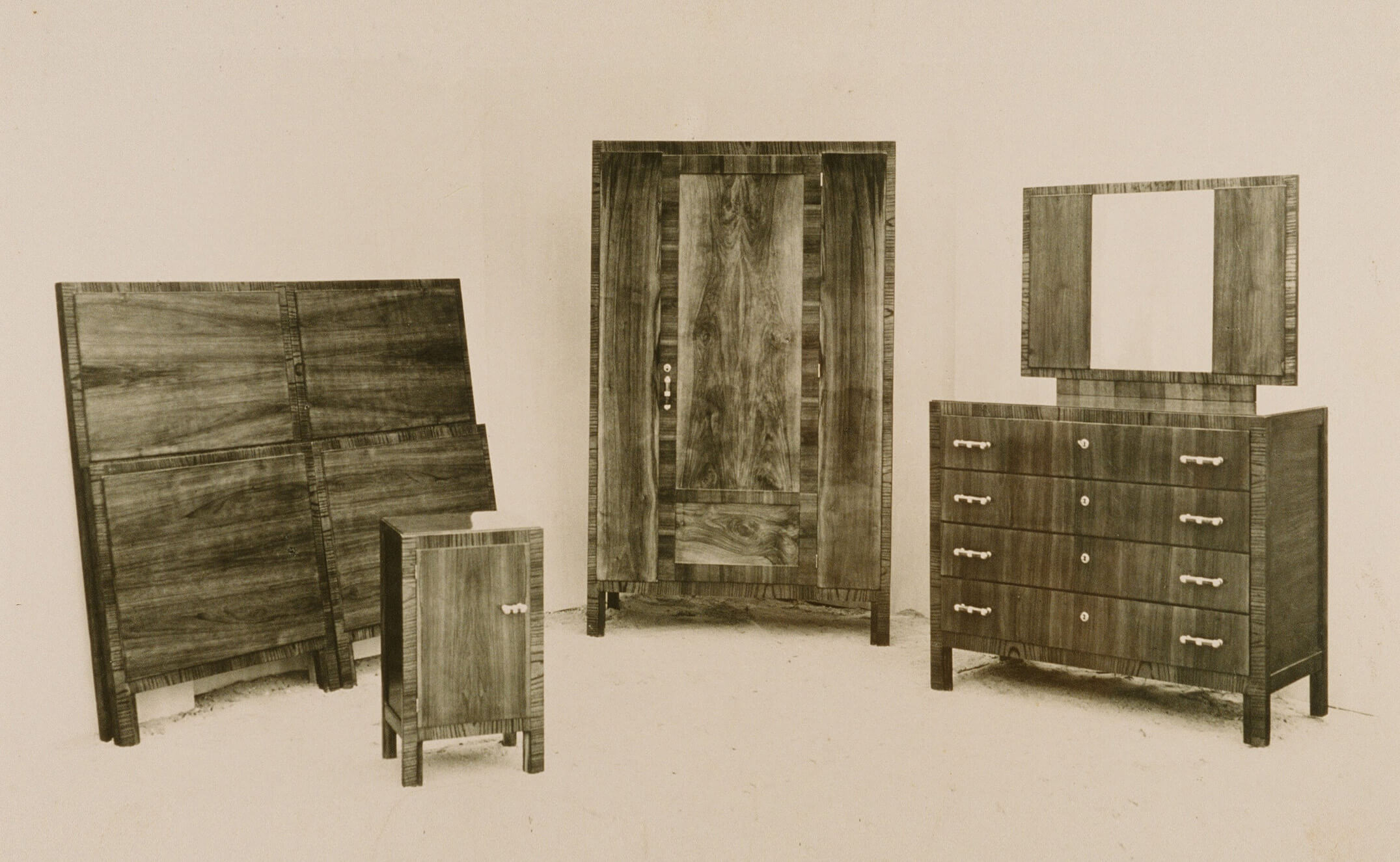
Furniture in Slatted Panforte, an alternative material to the then-dominant tambour panels
1938-1967
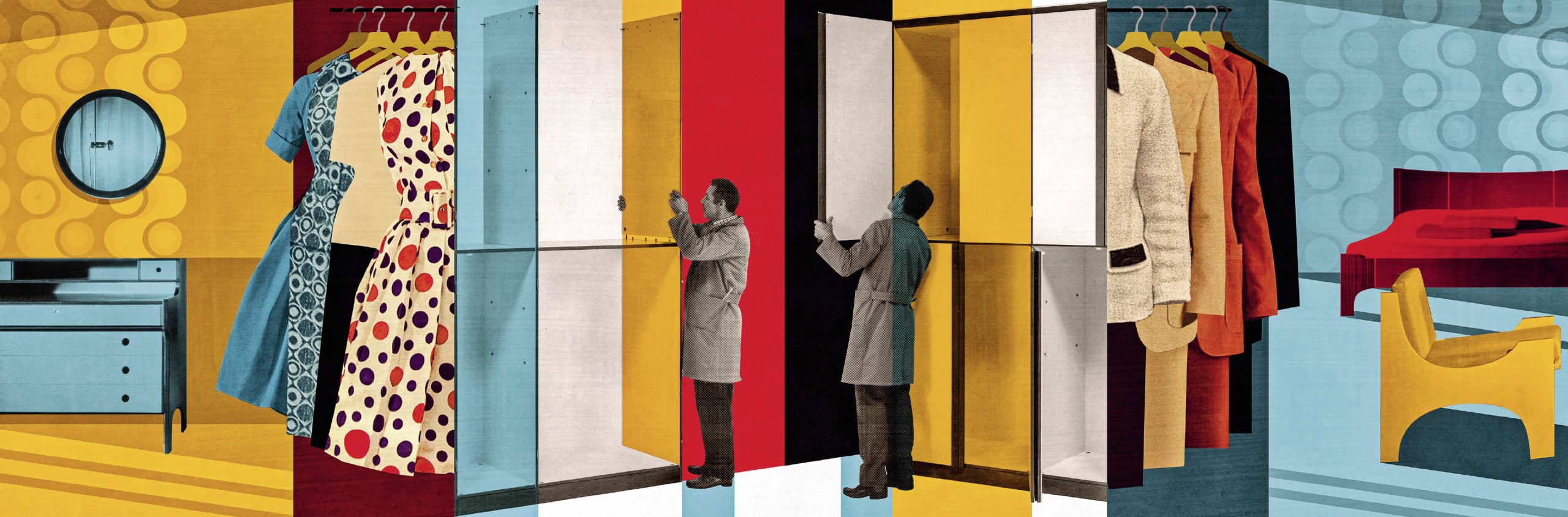
Innovation Between Industry and Craftsmanship
In the 1960s, the company became Estel (from the acronym Estensibile Stella) with the iconic folding door designed to meet the needs of small spaces. The company patented revolutionary solutions, such as the fork and a hinge for shipping disassembled furniture, confirming its innovative spirit.
1950s
These are the years of the “Quattro Stagioni” wardrobe by Stella, made with the revolutionary slatted panforte—a solid and easily workable material that allowed for bespoke creations. Additionally, Alfredo Stella patented the coat hanger fork and introduced innovative hinges for shipping disassembled furniture, ensuring significant savings in time, space, and costs.
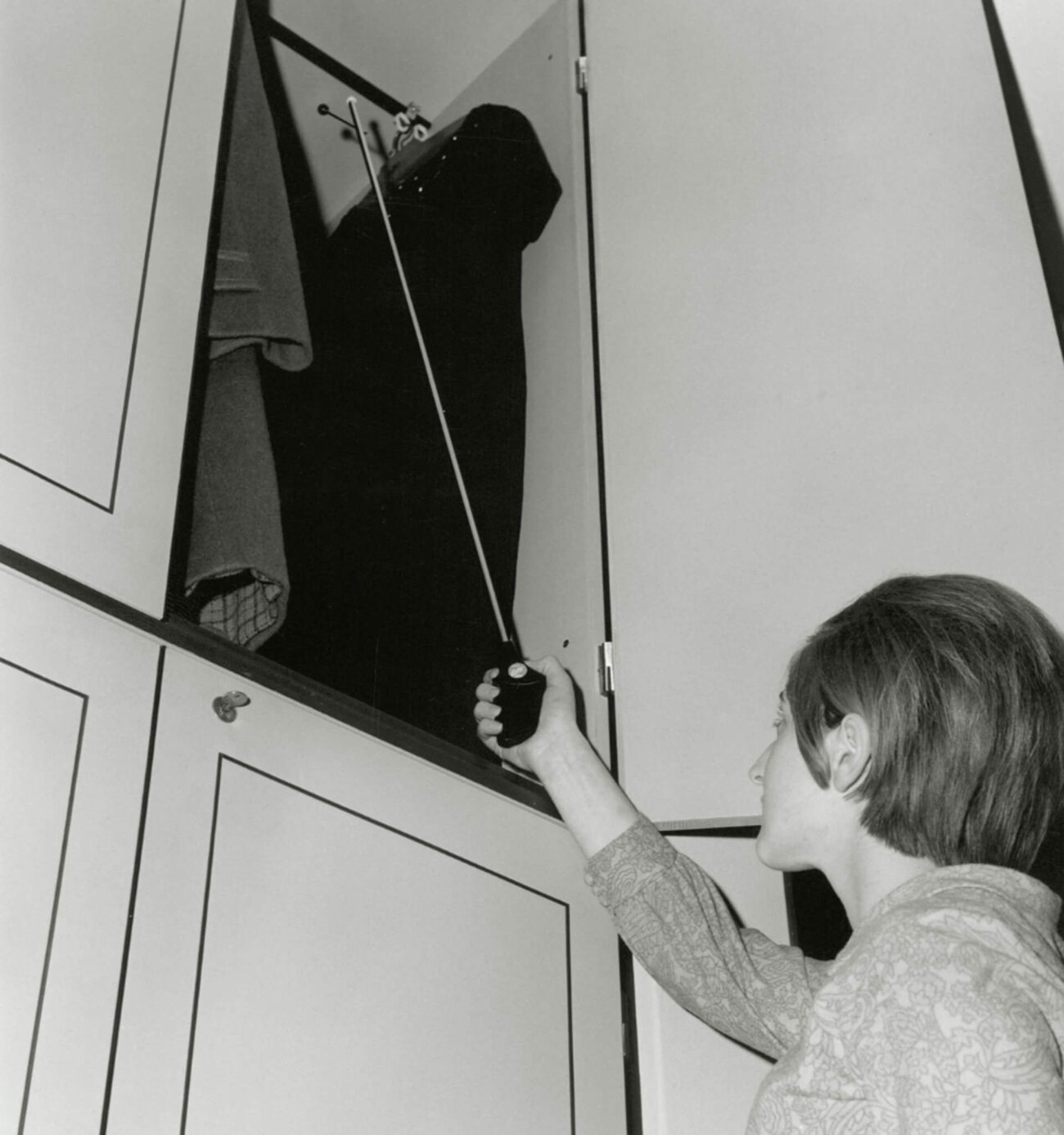
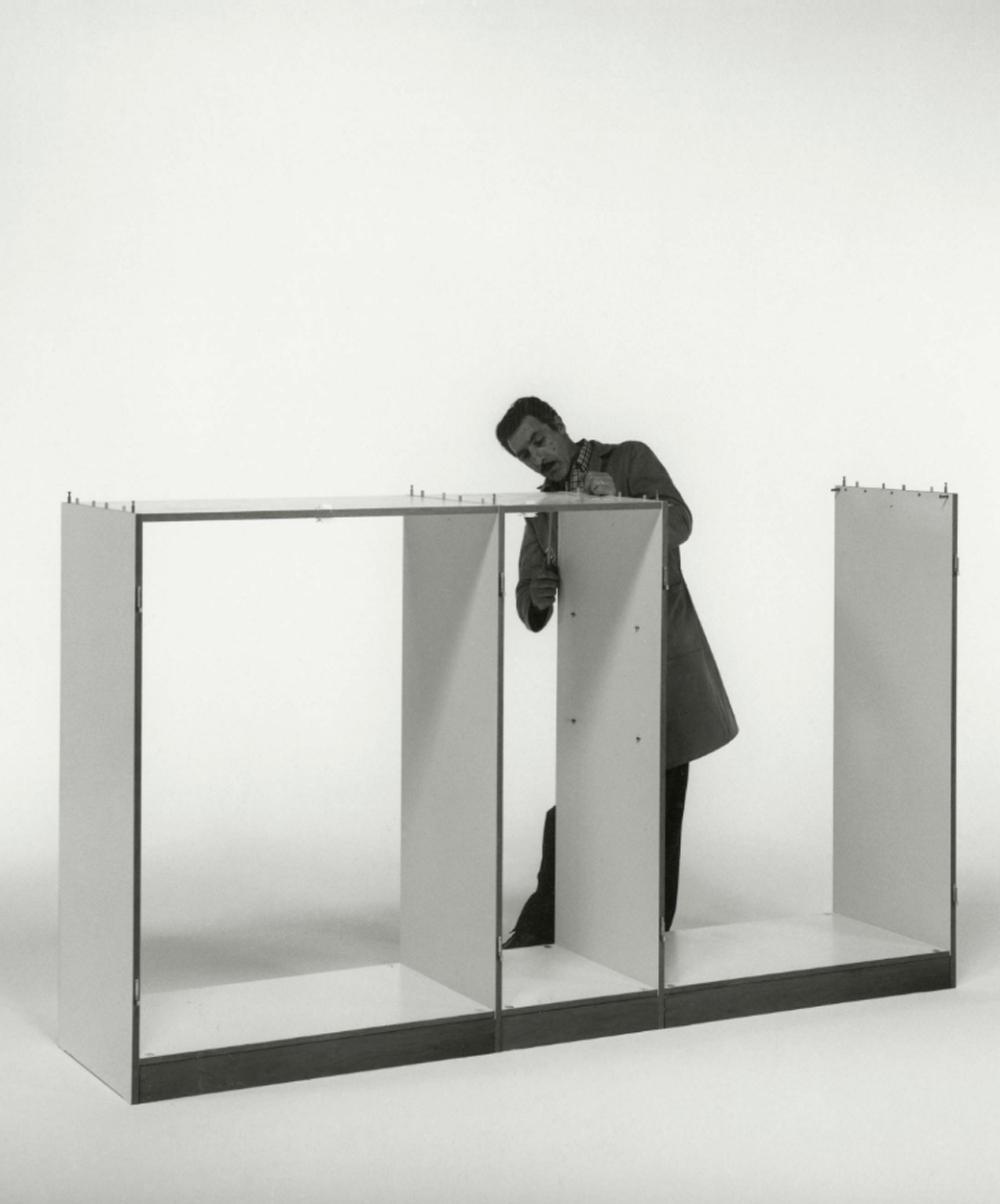
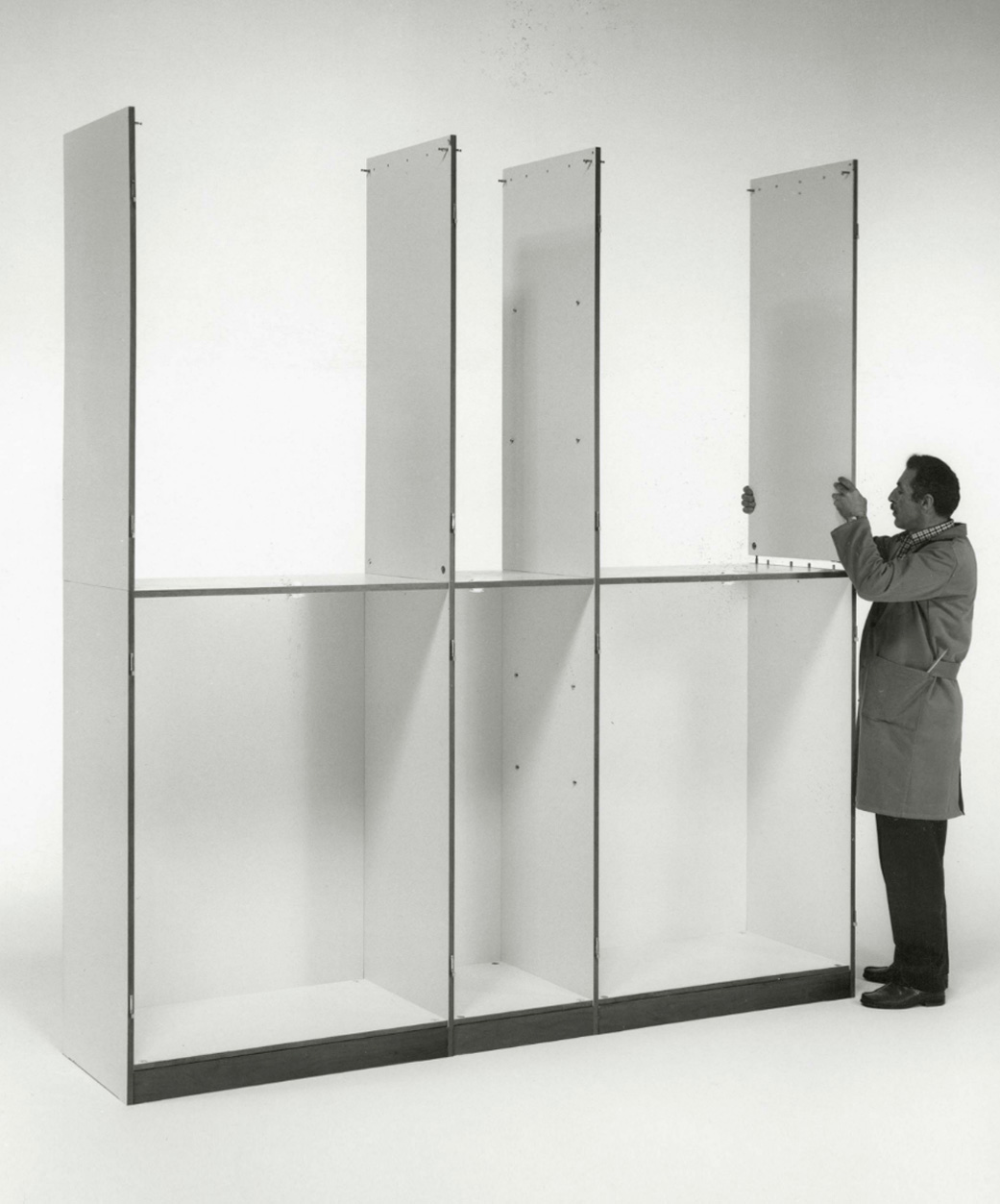
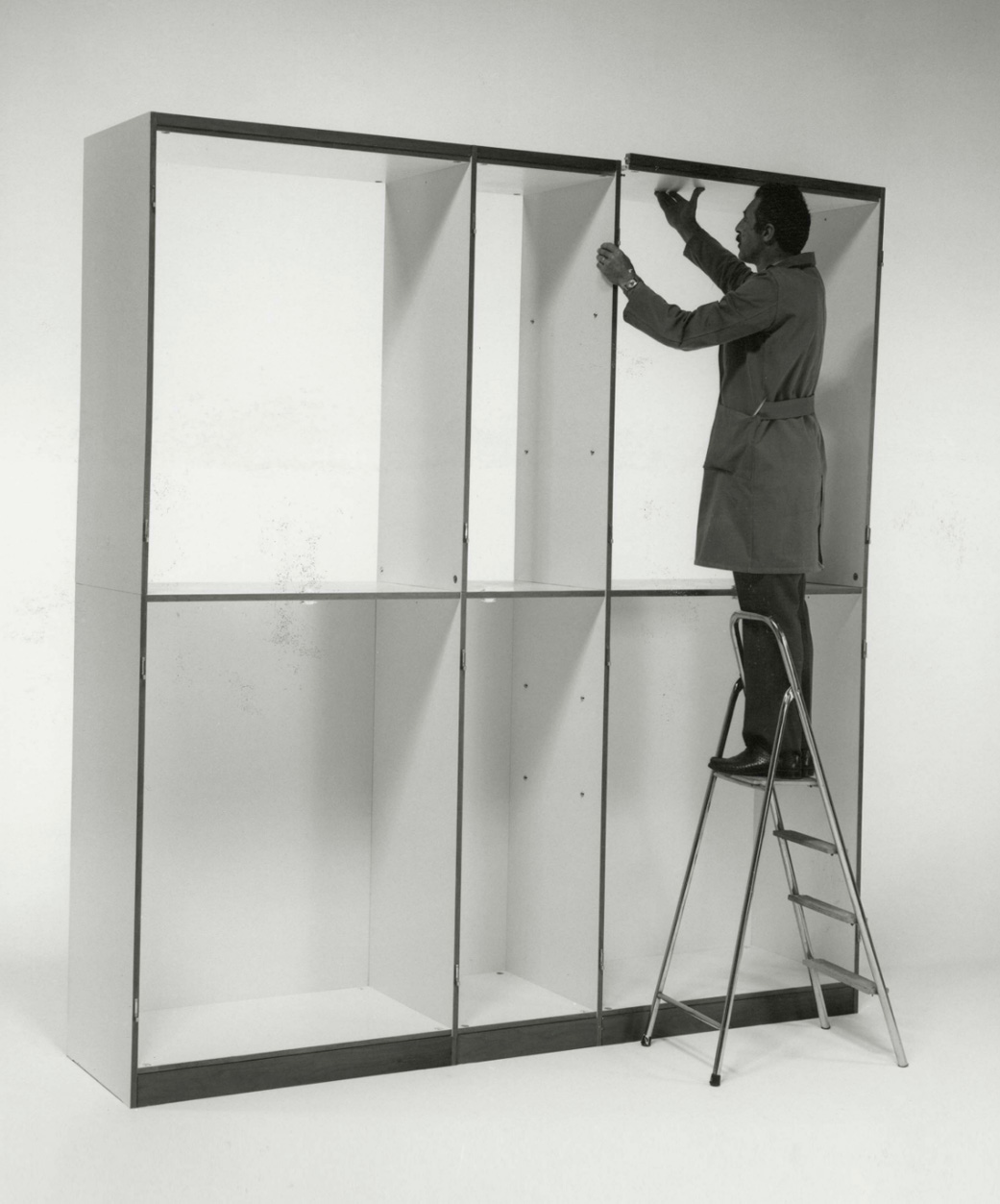
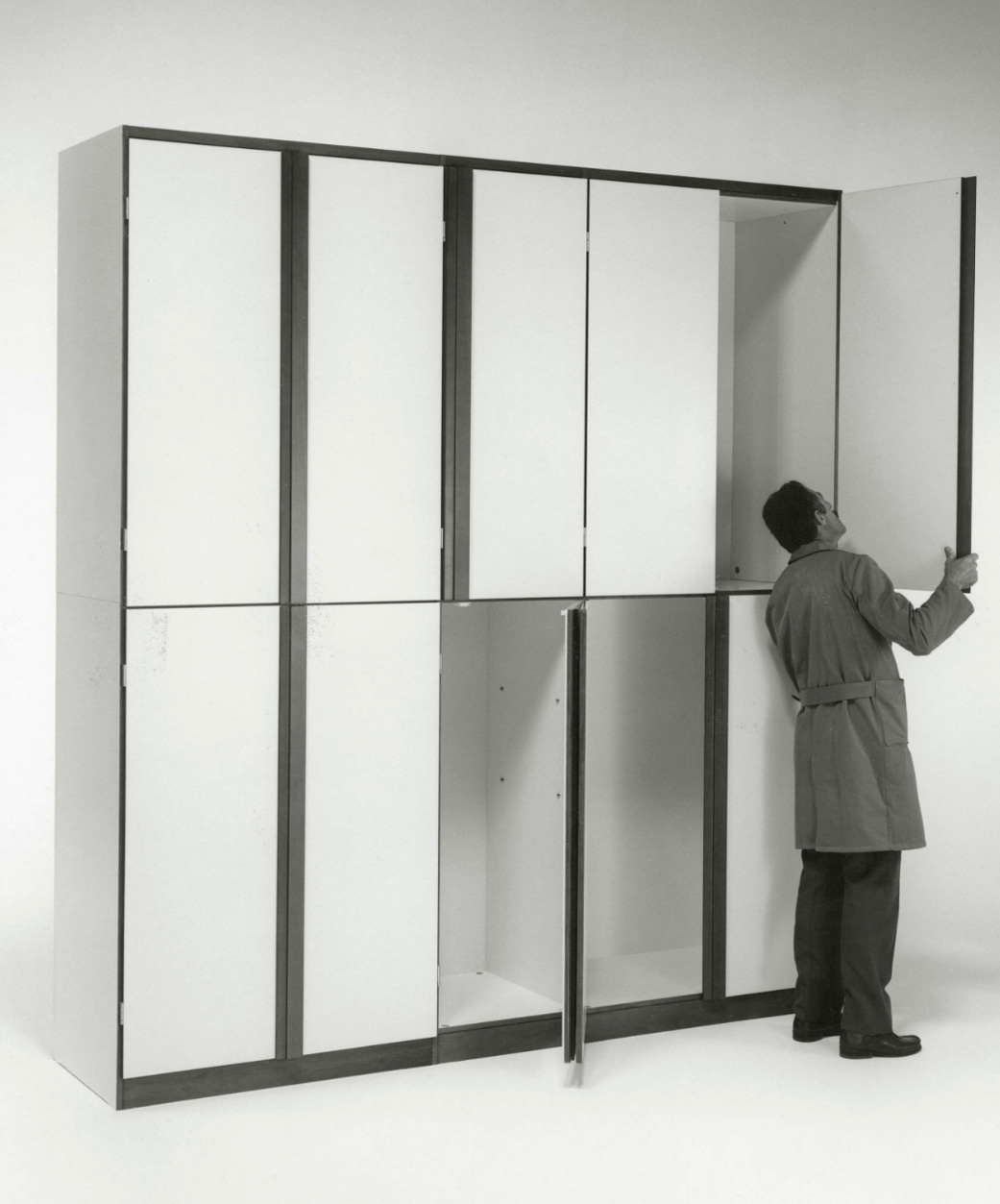
On-site assembly sequence of a “Quattro Stagioni” wardrobe, the first example of an assembly tutorial.
1960s
These are the years that mark the official birth of Estel, an acronym for Estensibile Stella, with the first patented sliding wardrobe: a brilliant solution for small-space needs. The company consolidated its identity and continued its path of steady growth.
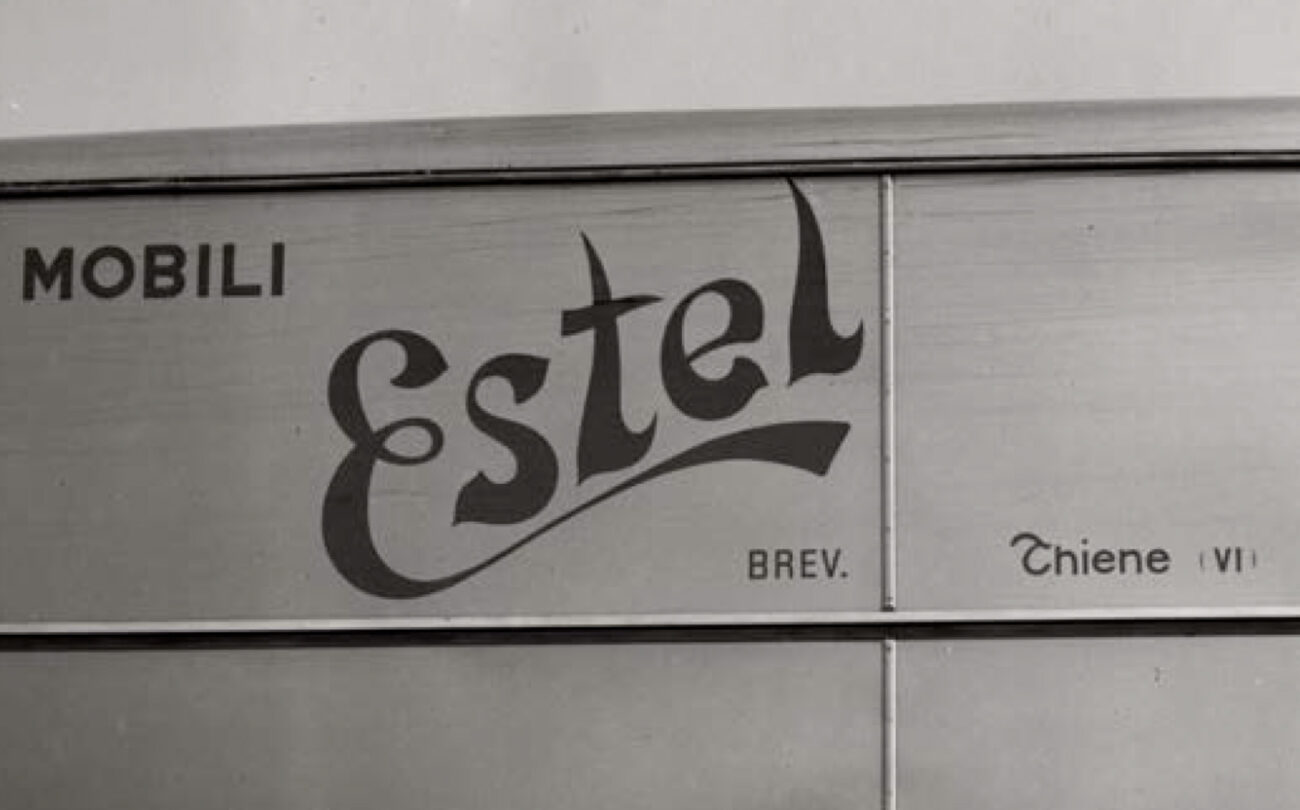
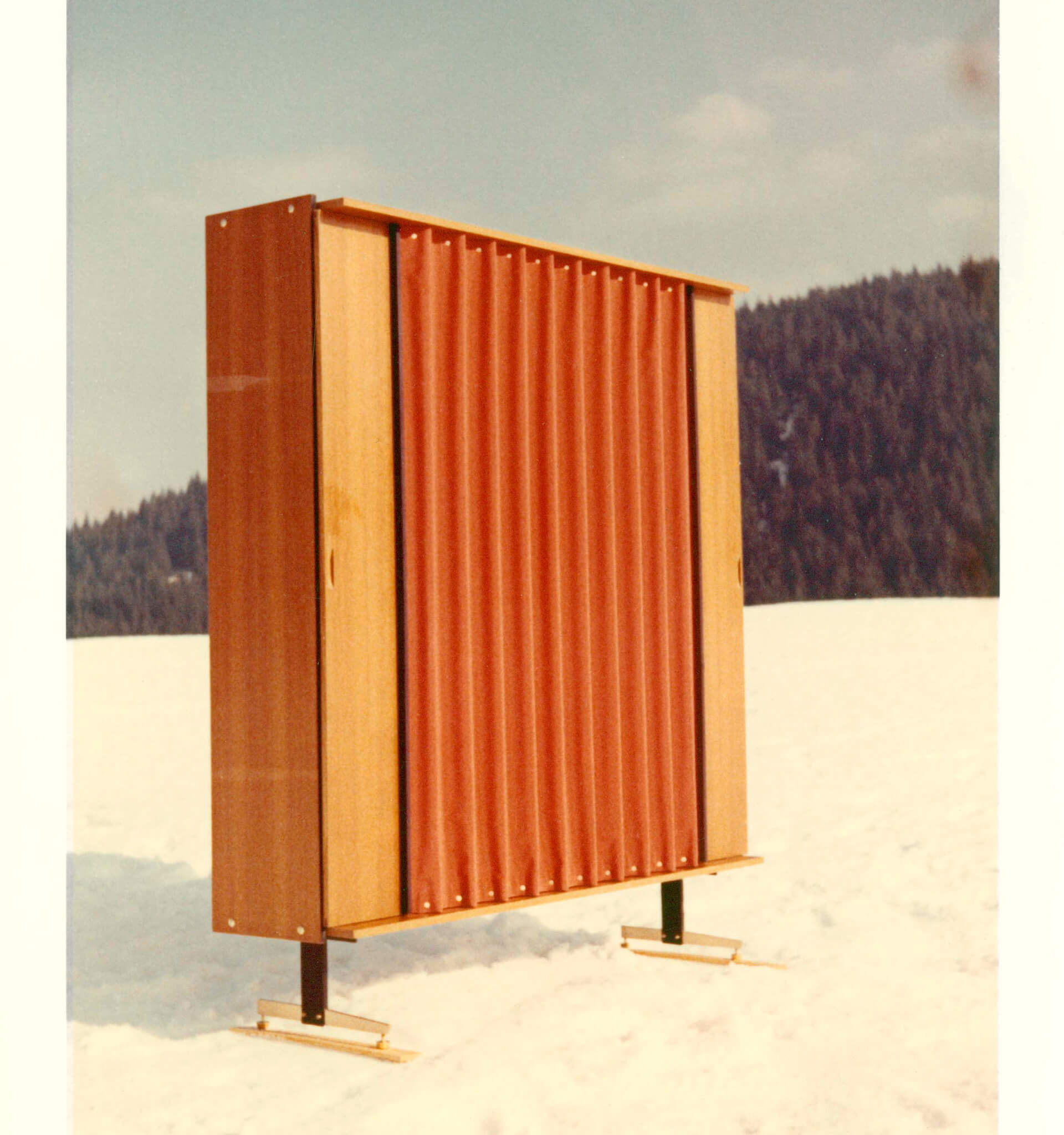
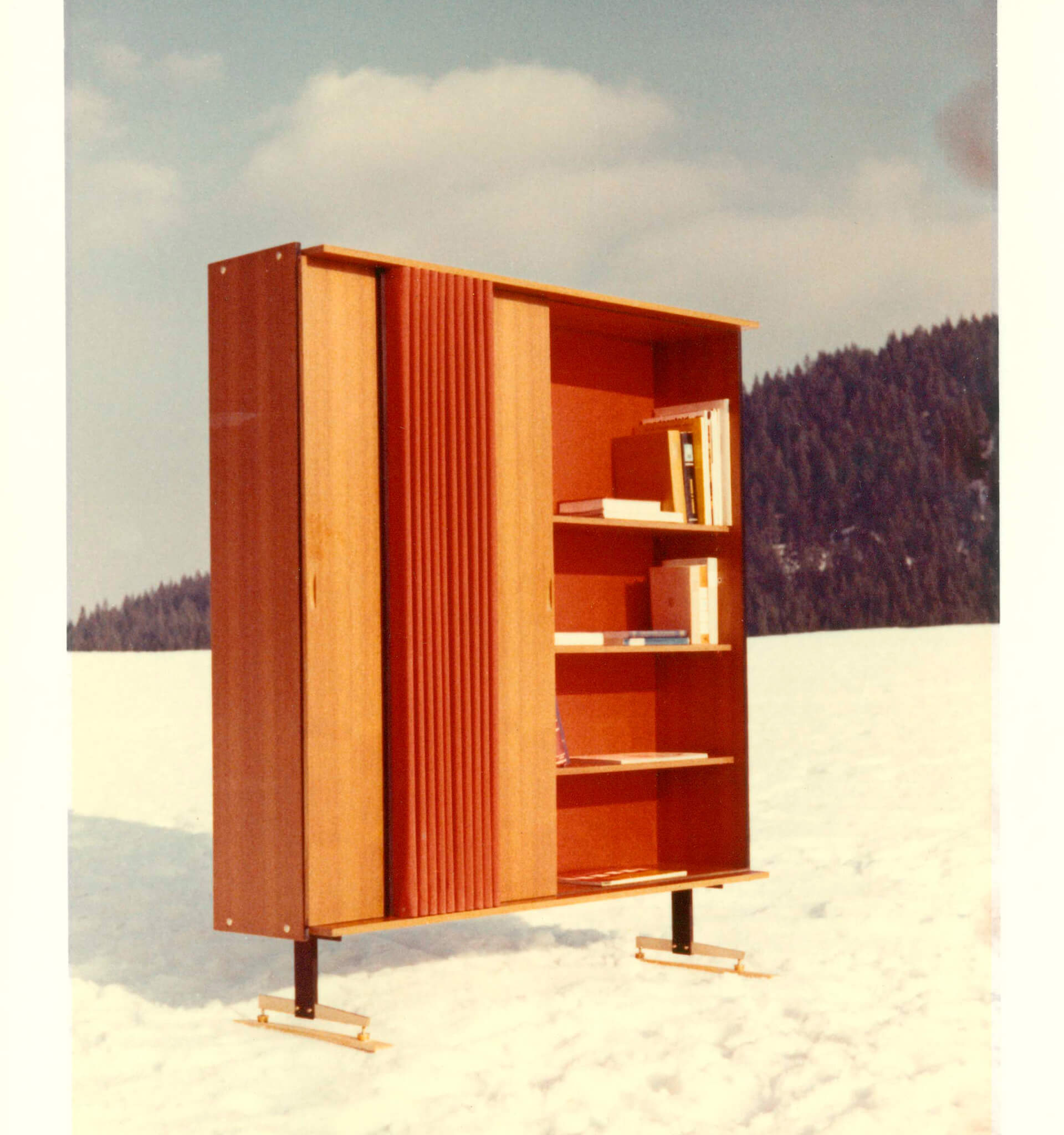
Polaroids of the Estensibile Stella folding-door wardrobe in Dralon finish, designed for an advertising poster.
1968-1997
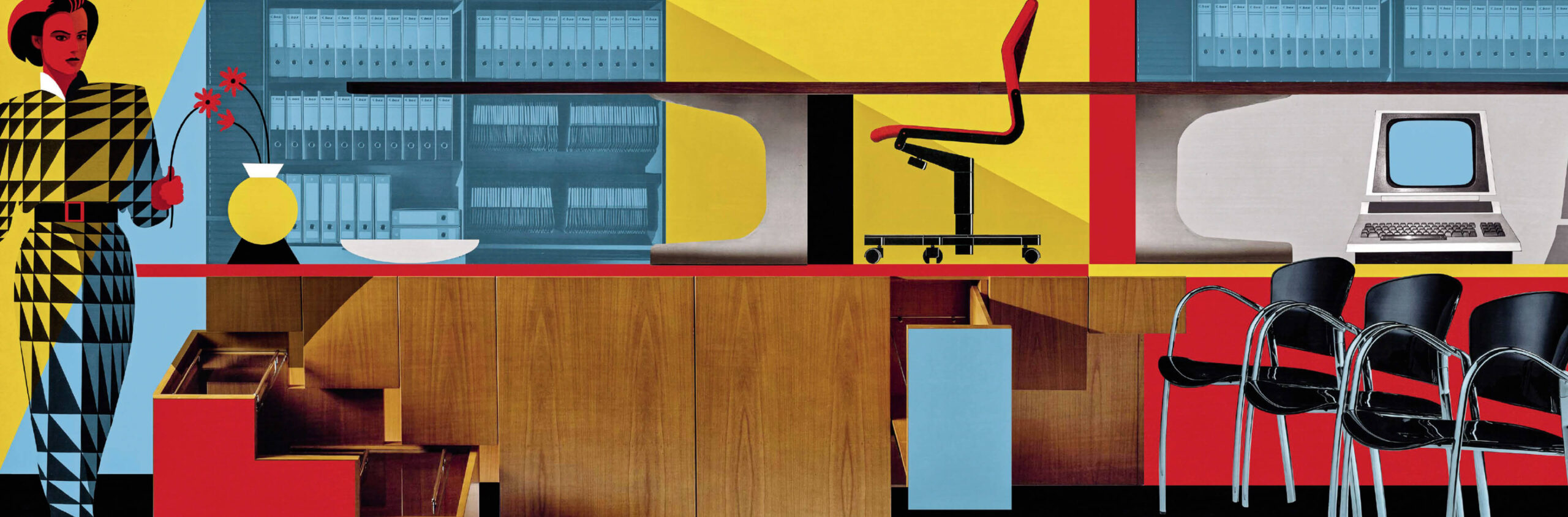
International Growth Between Home and Office
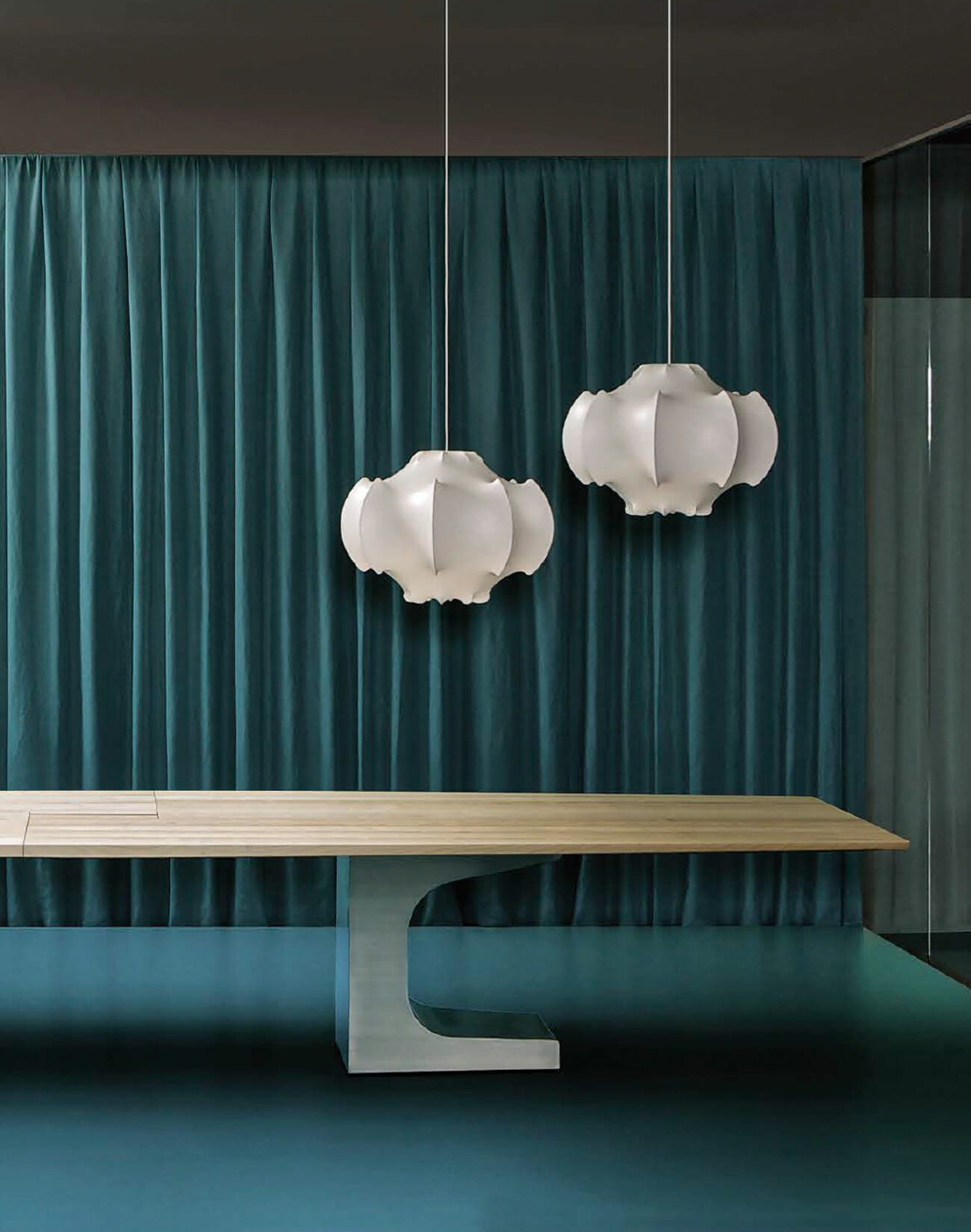
In 1979, the Office Furniture Division was established, accelerating Estel’s expansion through collaborations with prominent designers and a strong distribution network. The 1980s saw a boom in the sector with iconic products such as the Niemeyer table and the Kronos executive system. This growth led to the acquisition of a new facility in Arsiero, strengthening the company’s production capacity.
1979
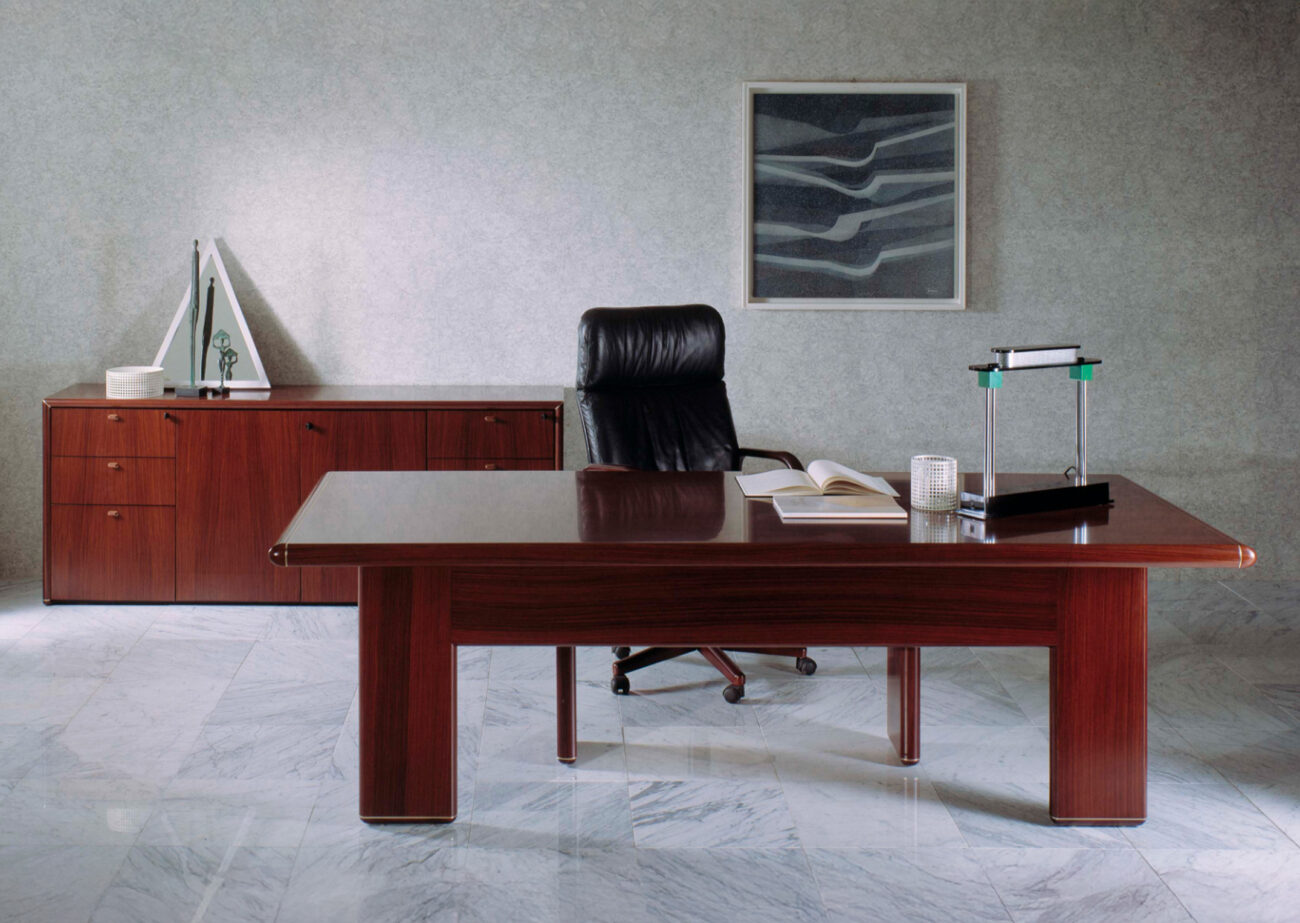
Building on its experience in residential furniture, Estel entered the office sector with the creation of the Office Furniture Division.
1985 – The Meeting with Oscar Niemeyer
In the 1980s, the workplace was structured according to a strict hierarchy, reflected in the furniture: high-quality materials and refined finishes for executive spaces, functional solutions for operational areas. In 1985, Alberto and Pierluigi Stella met Brazilian architect Oscar Niemeyer in São Paulo, persuading him to design an executive desk. The result was an iconic piece, symbolizing Estel’s evolution toward designer furniture.
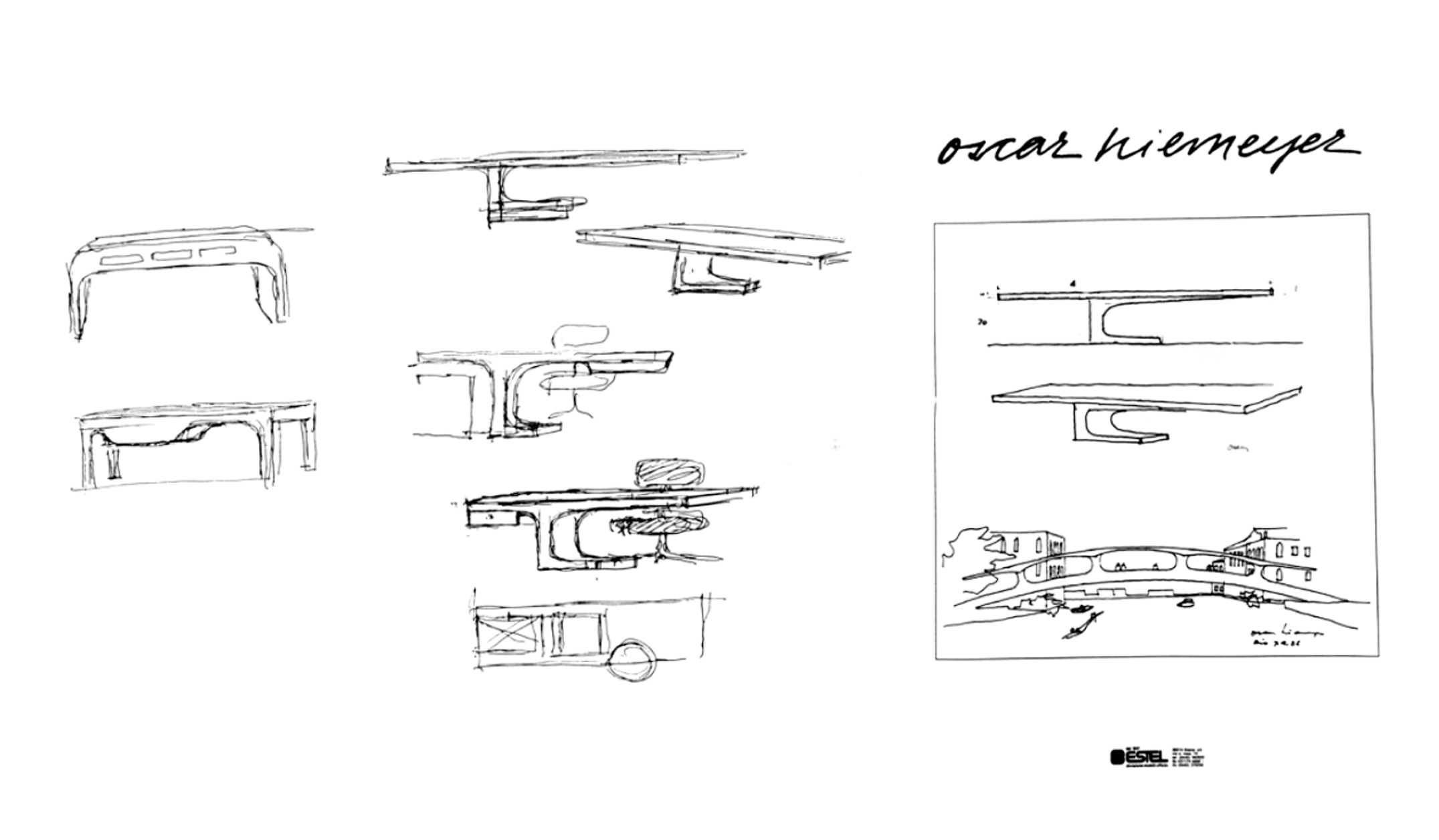
Sketches and designs of the Niemeyer desk, 1985, by Brazilian architect Oscar Niemeyer
1987 – Prestigious Collaborations and Innovation
In 1987, the Kronos executive system introduced an innovative concept of integrated workstations, while Paolo Favaretto’s Reflex chair, with its patented mechanism, marked a turning point in ergonomics.
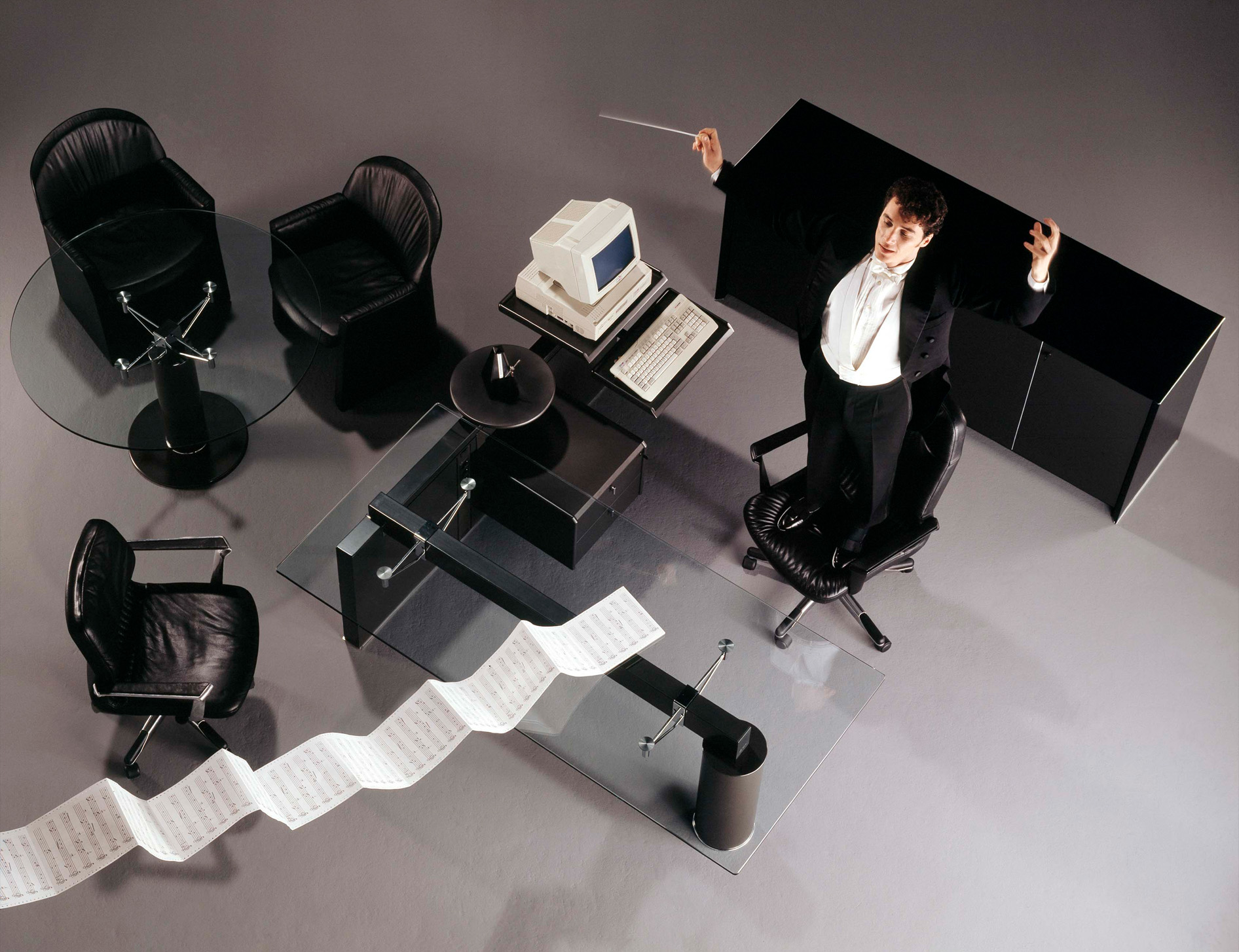
Kronos, 1987, designed by Fabio Gigli. Executive series focused on the lightness effect of glass combined with steel and black lacquer.
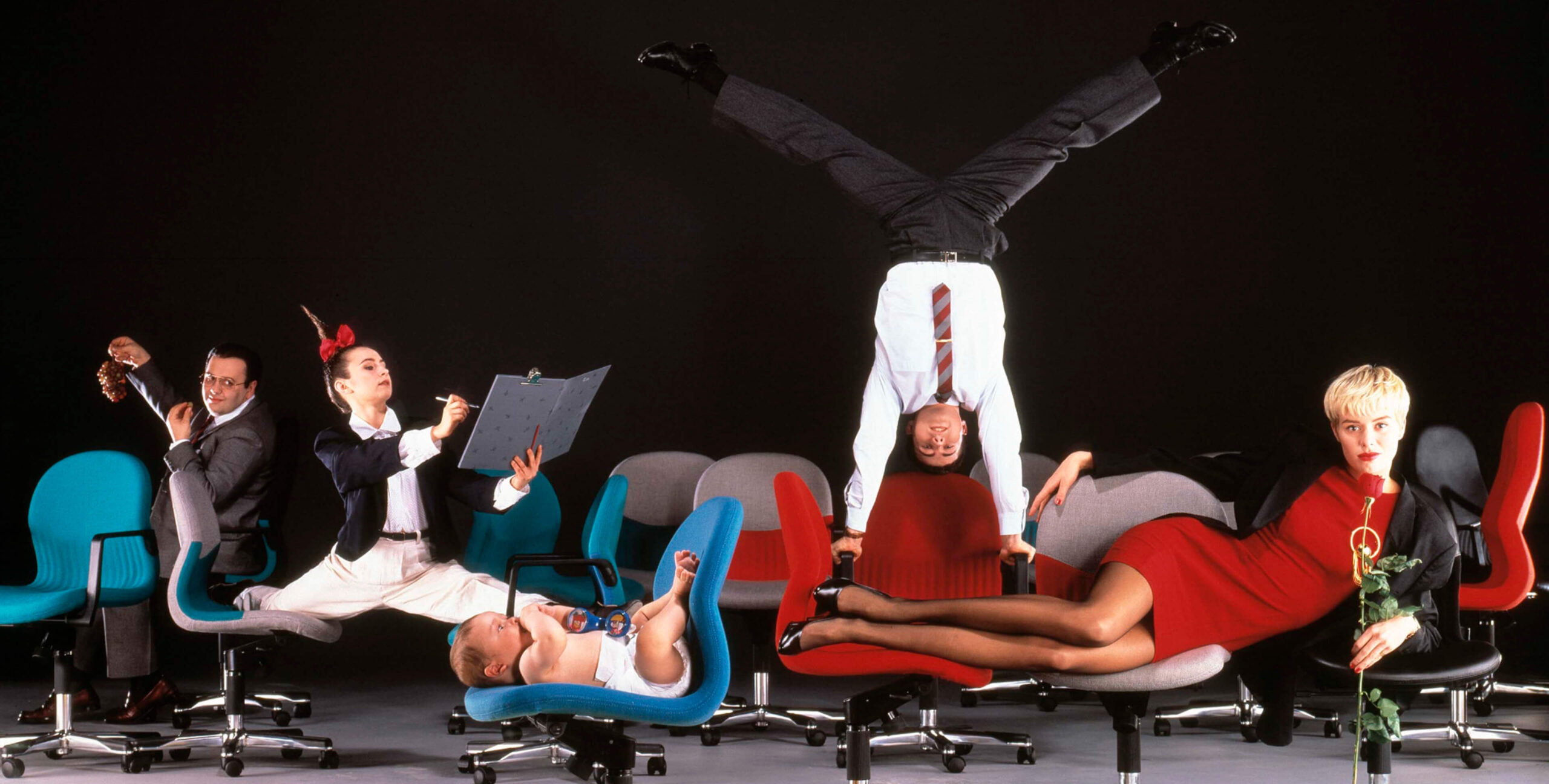
1989 advertising featuring Reflex office chairs designed by Paolo Favaretto. Photo by Studio Azzurro.
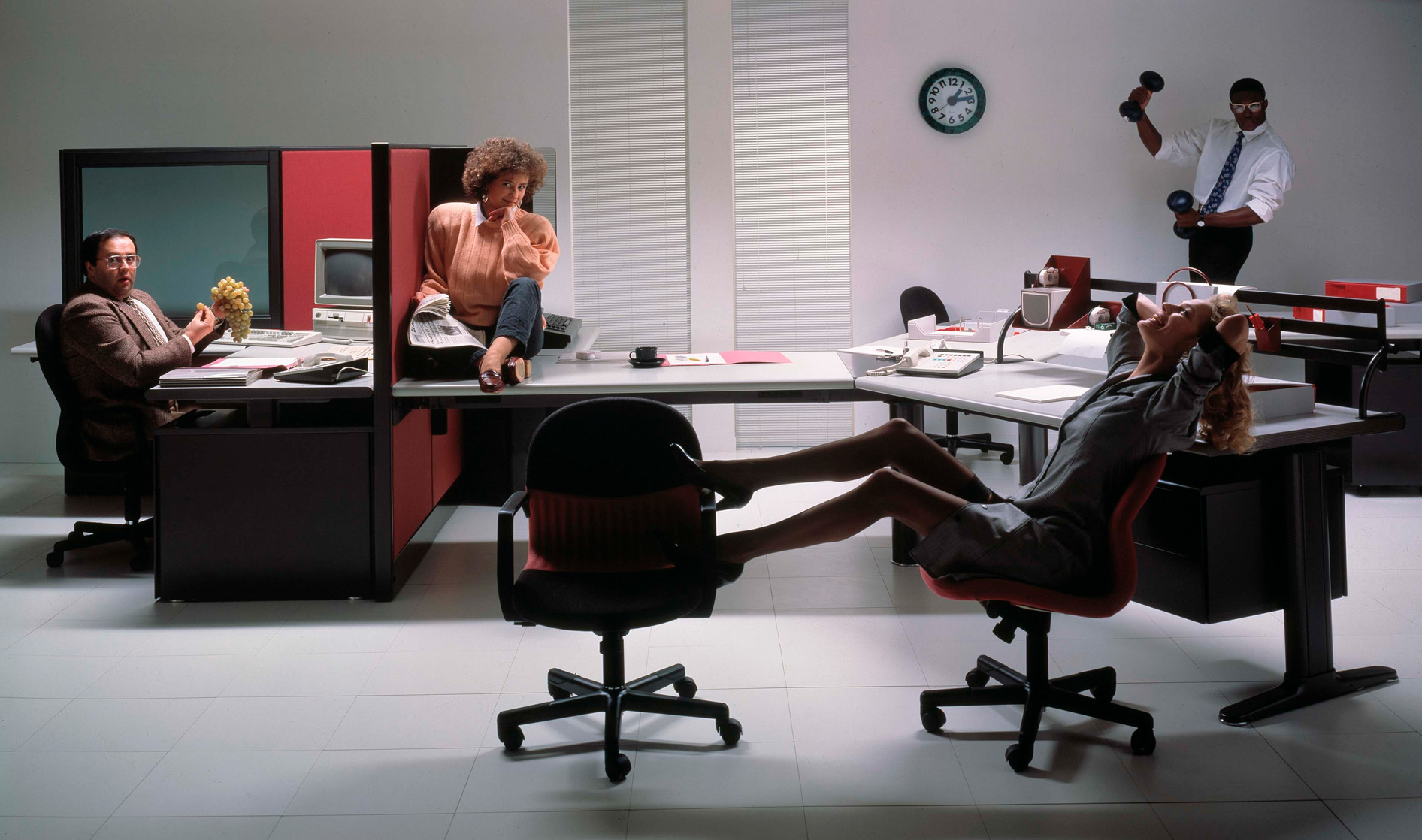
1990 advertising, Reflex and Syncro System, with Reflex chair designed by Paolo Favaretto and Syncro program by Flavio Gigli and Pierluigi Stella. Photo by Studio Azzurro.
1998-2013
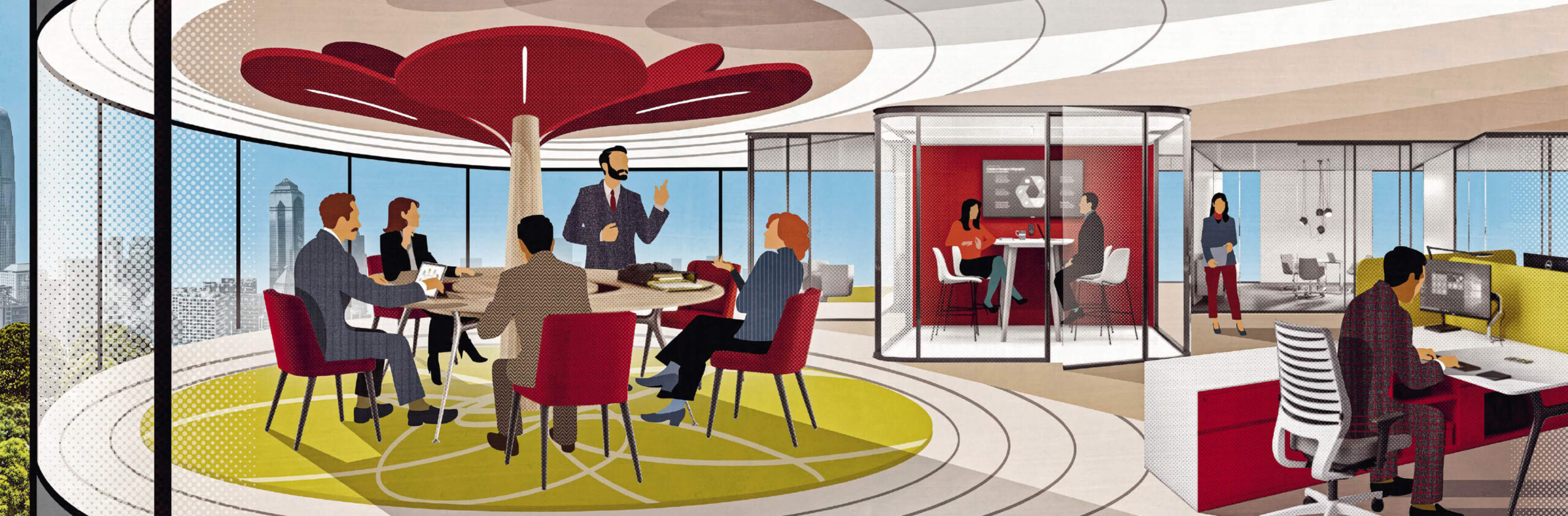
Contract: An Integrated Model for the Business Sector
At the end of the 1990s, Estel entered the contract sector, offering turnkey solutions for offices, hotels, banks, and retail. With standard products, custom solutions, and advanced logistics, the company established itself as a key reference in furnishing large-scale projects in Italy and across Europe.
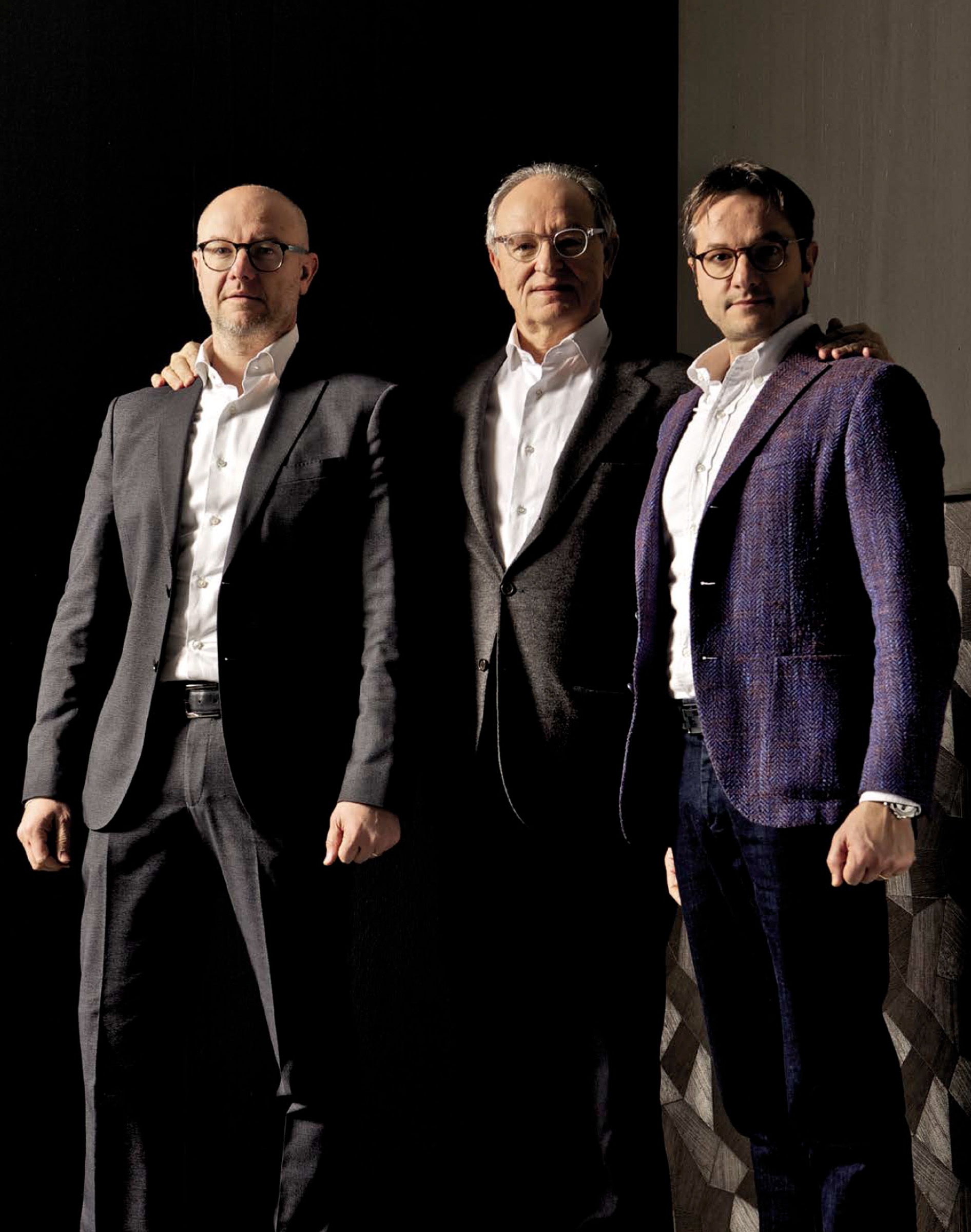
Second and third generation of the Stella family: from left, Massimo, Alberto, and Matteo
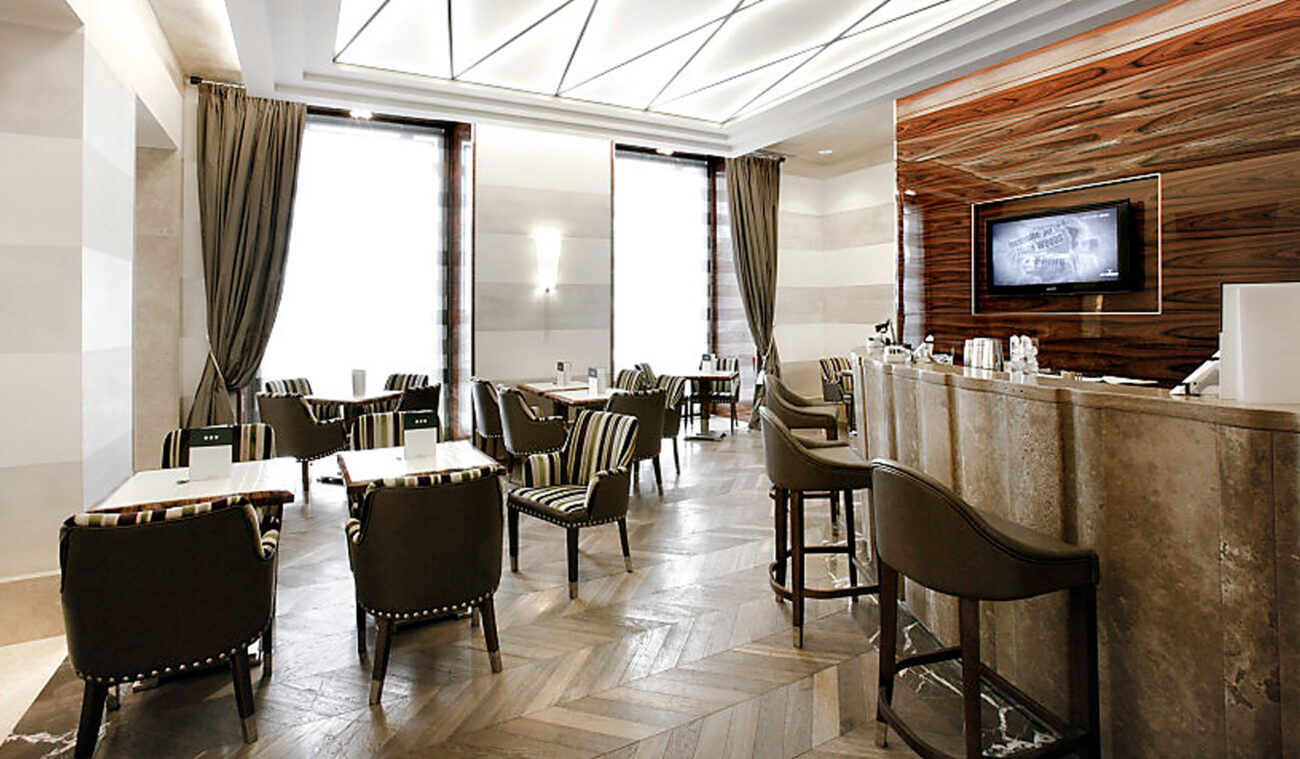
Implementation of UNA Hotel, Rome 2008
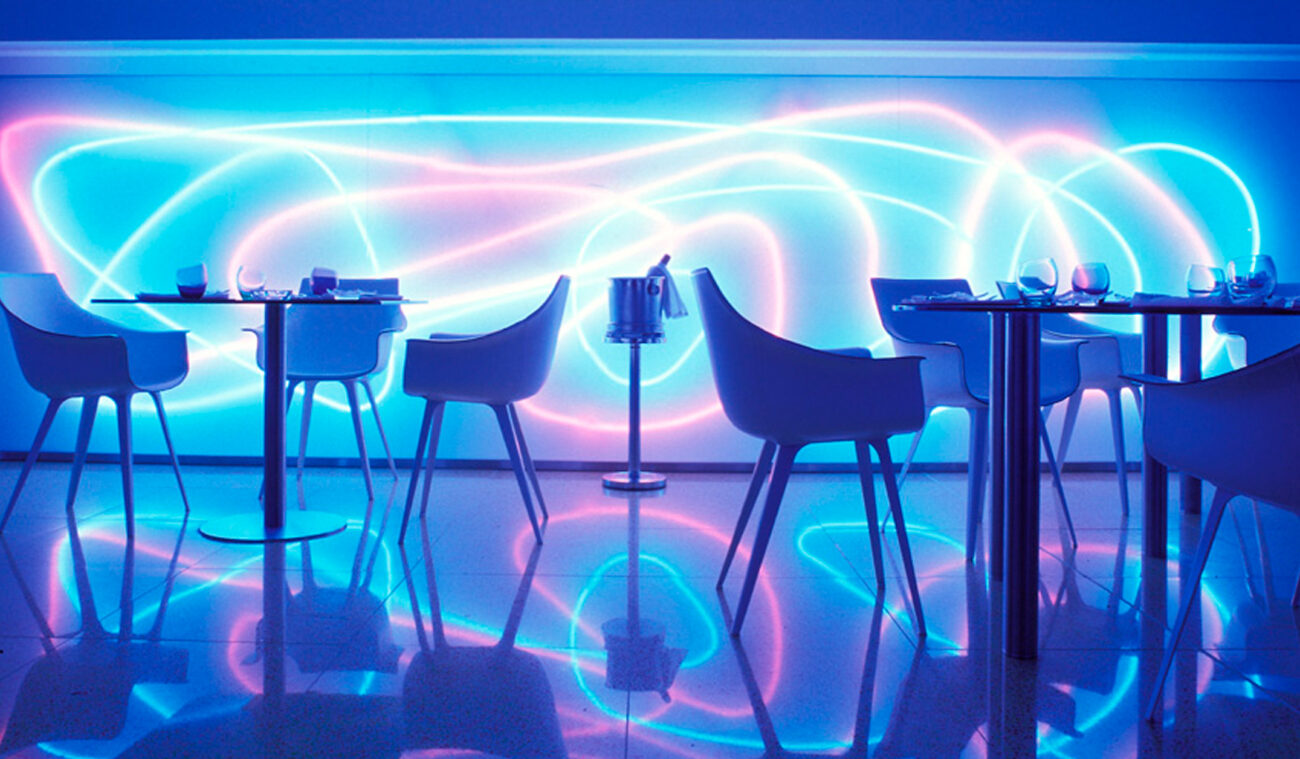
Implementation of Hotel Semiramis, Athens 2004 – Karim Rashid
2000s – Expansion and Consolidation
Between 2002 and 2008, Estel acquired companies specialized in custom design and production, expanding its distribution network and strengthening its presence in the office furniture sector.
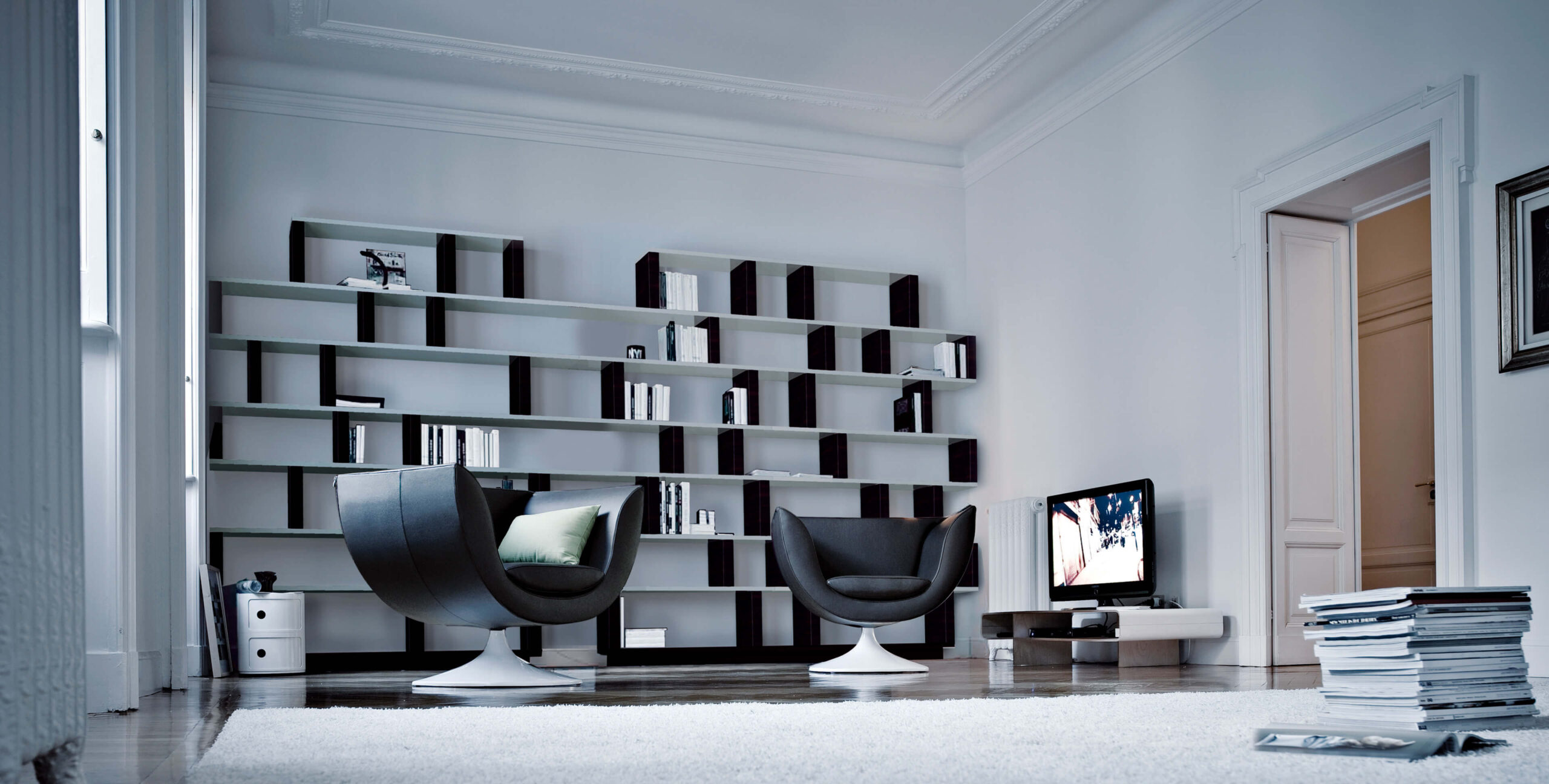
Spline Armchairs, Karim Rashid 2000
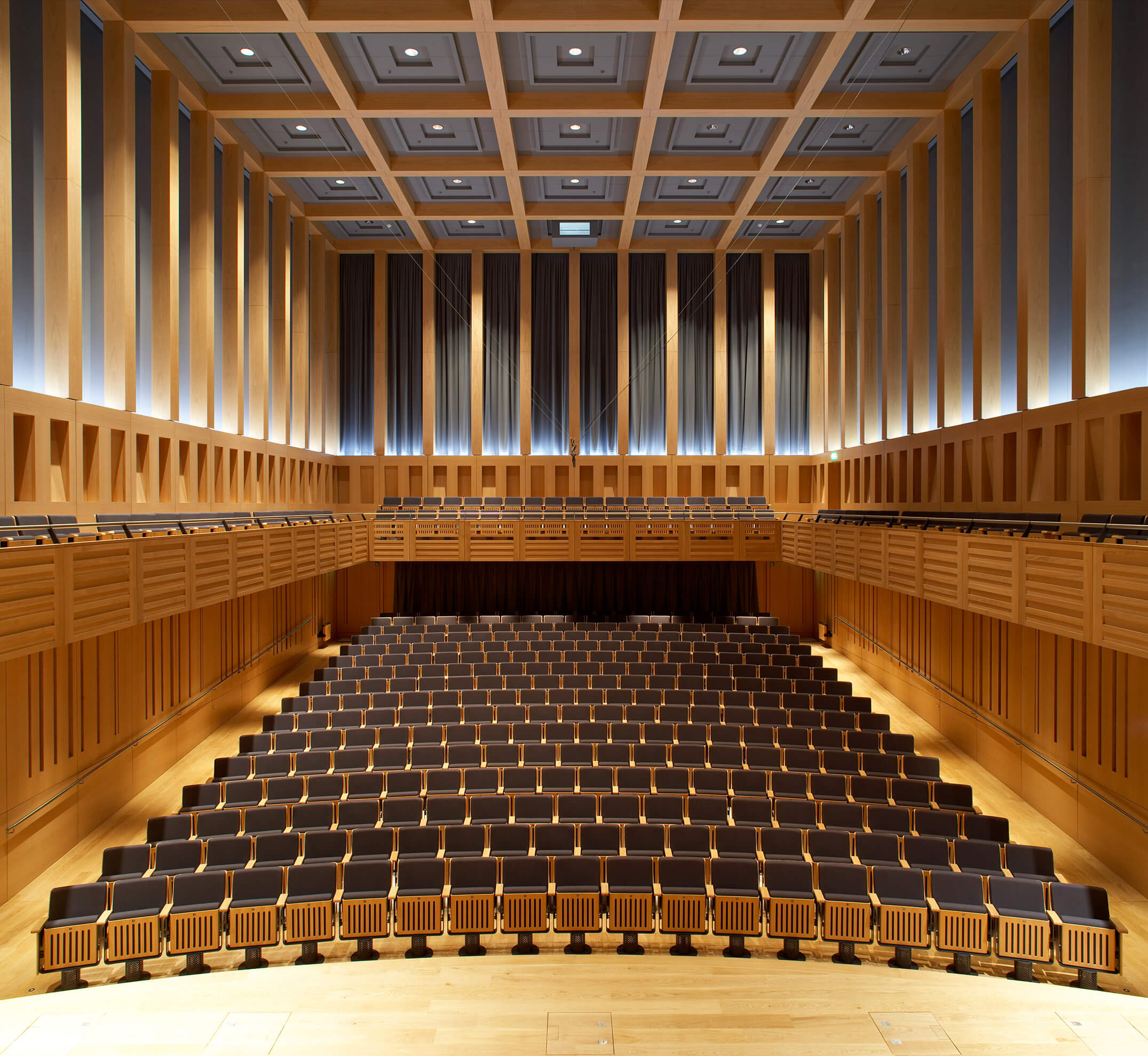
Kings Place, London 2008
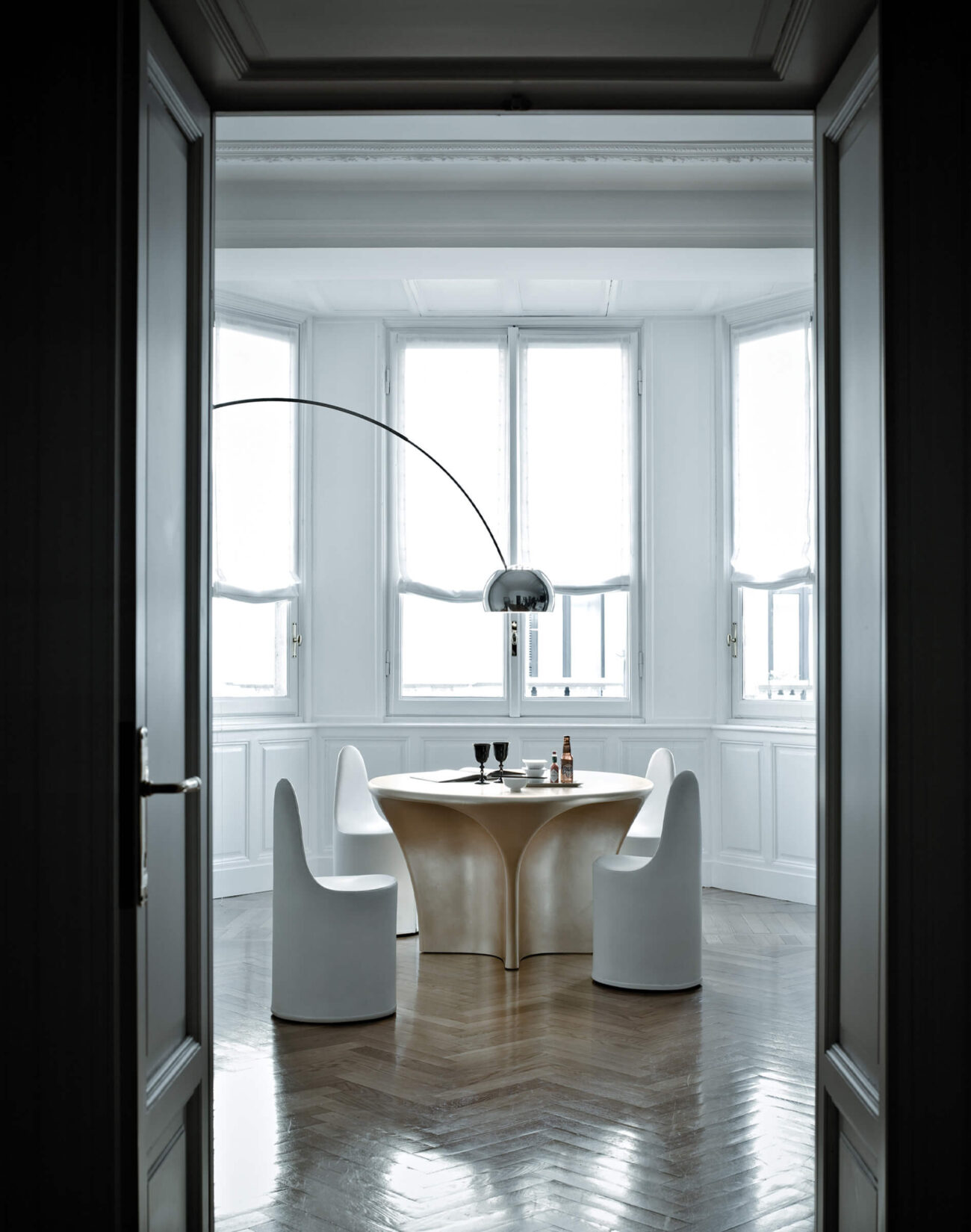
On the left: Landscape table and chair, Ross Lovegrove_1998
2014
The Italian Smart Office Takes Shape
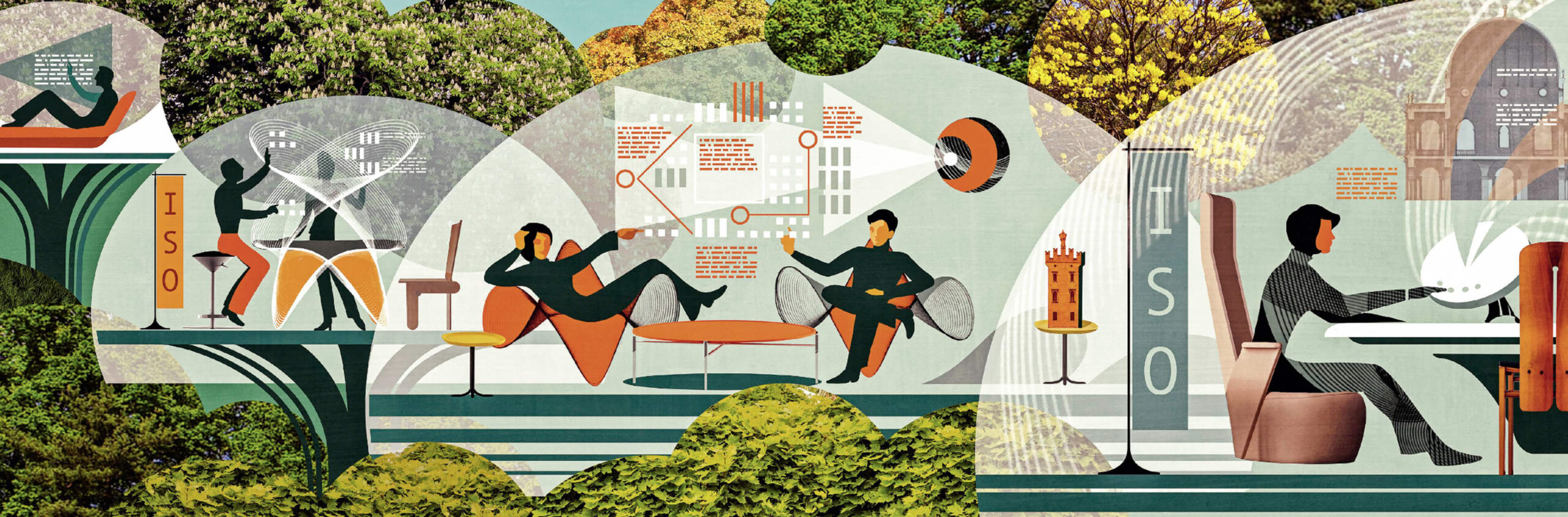
Since 2014, Estel has launched the Italian Smart Office concept, presented at Orgatec and the 2015 Milan Expo, revolutionizing workspaces with solutions designed to ensure well-being and productivity. This led to the creation of Collaborative Room for open spaces, the Phone Booth for private calls, and the Coffice integrating break and work areas. These solutions are complemented by modular furniture such as Baobab, Kite panels, and the Chat Sofà, redefining coworking with versatile solutions.
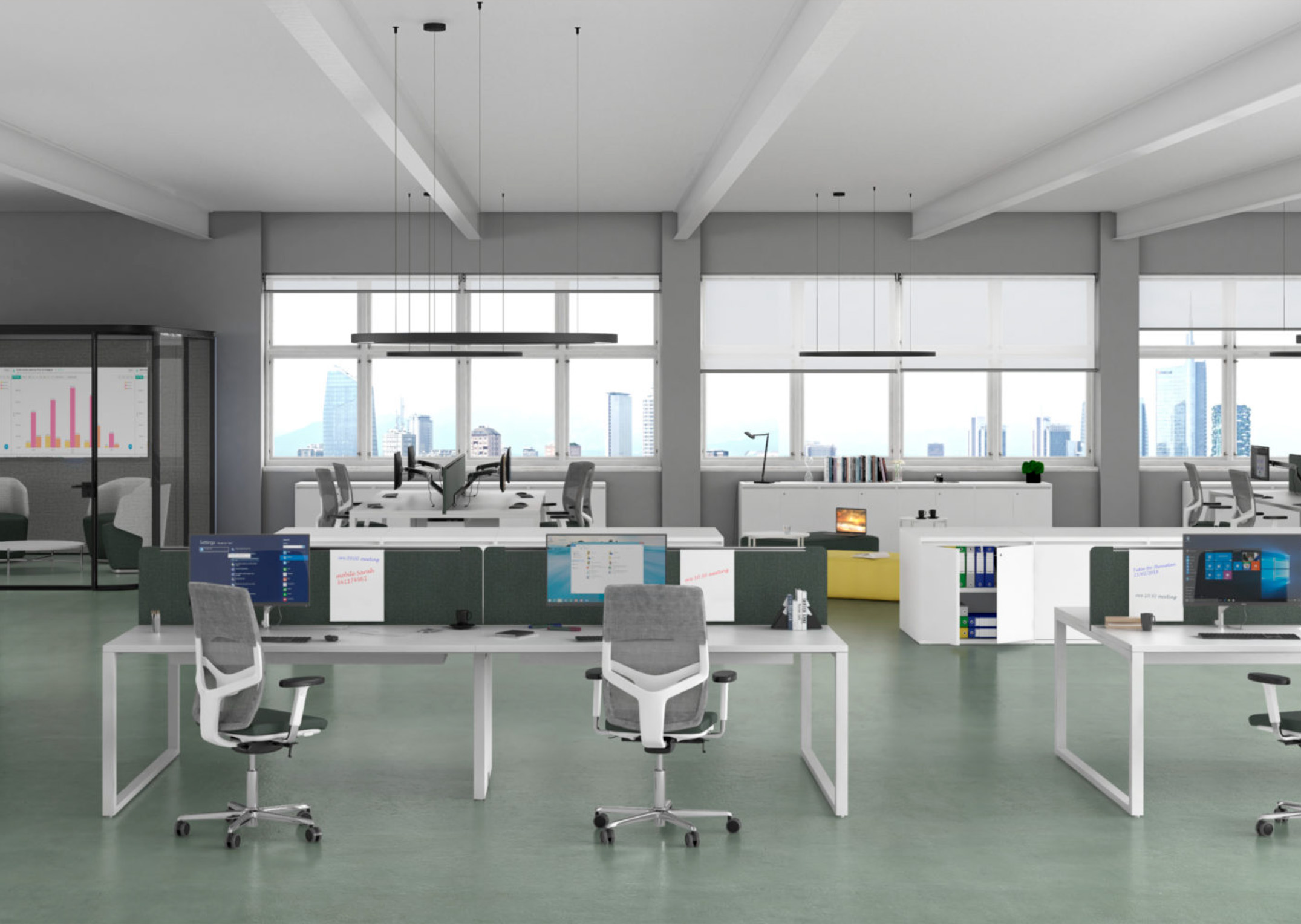
Asterisco APP Desk
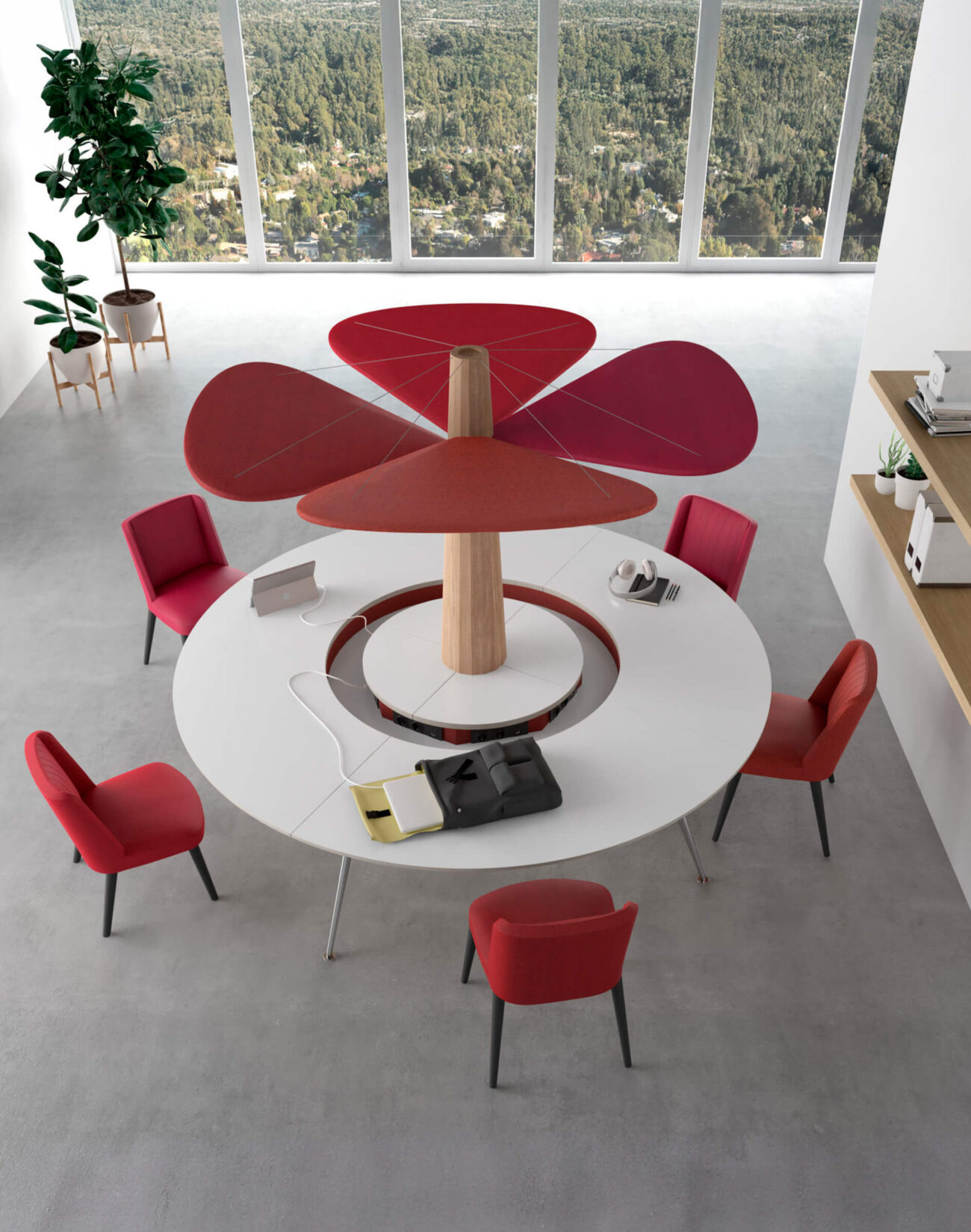
On the right: Baobab multipurpose table
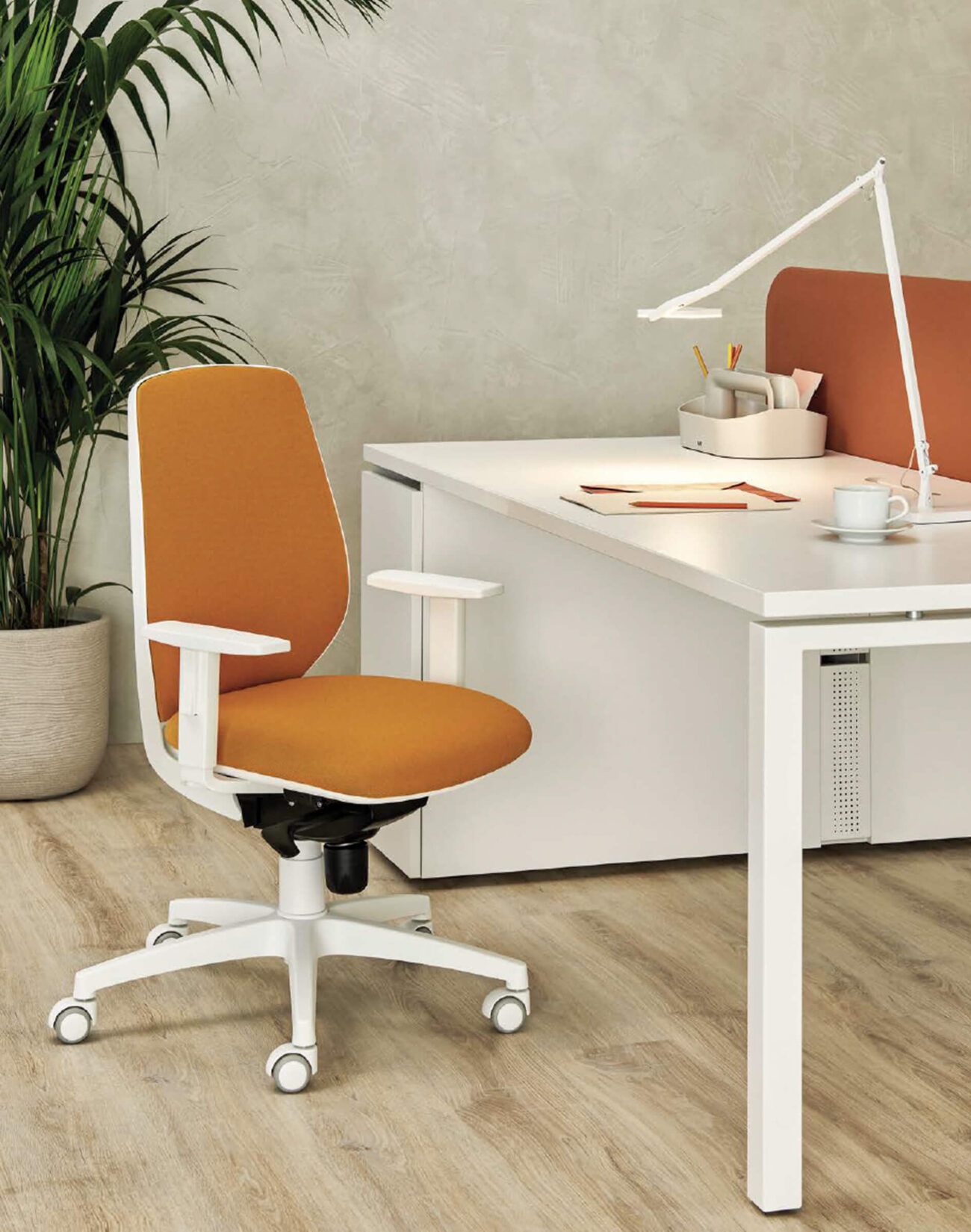
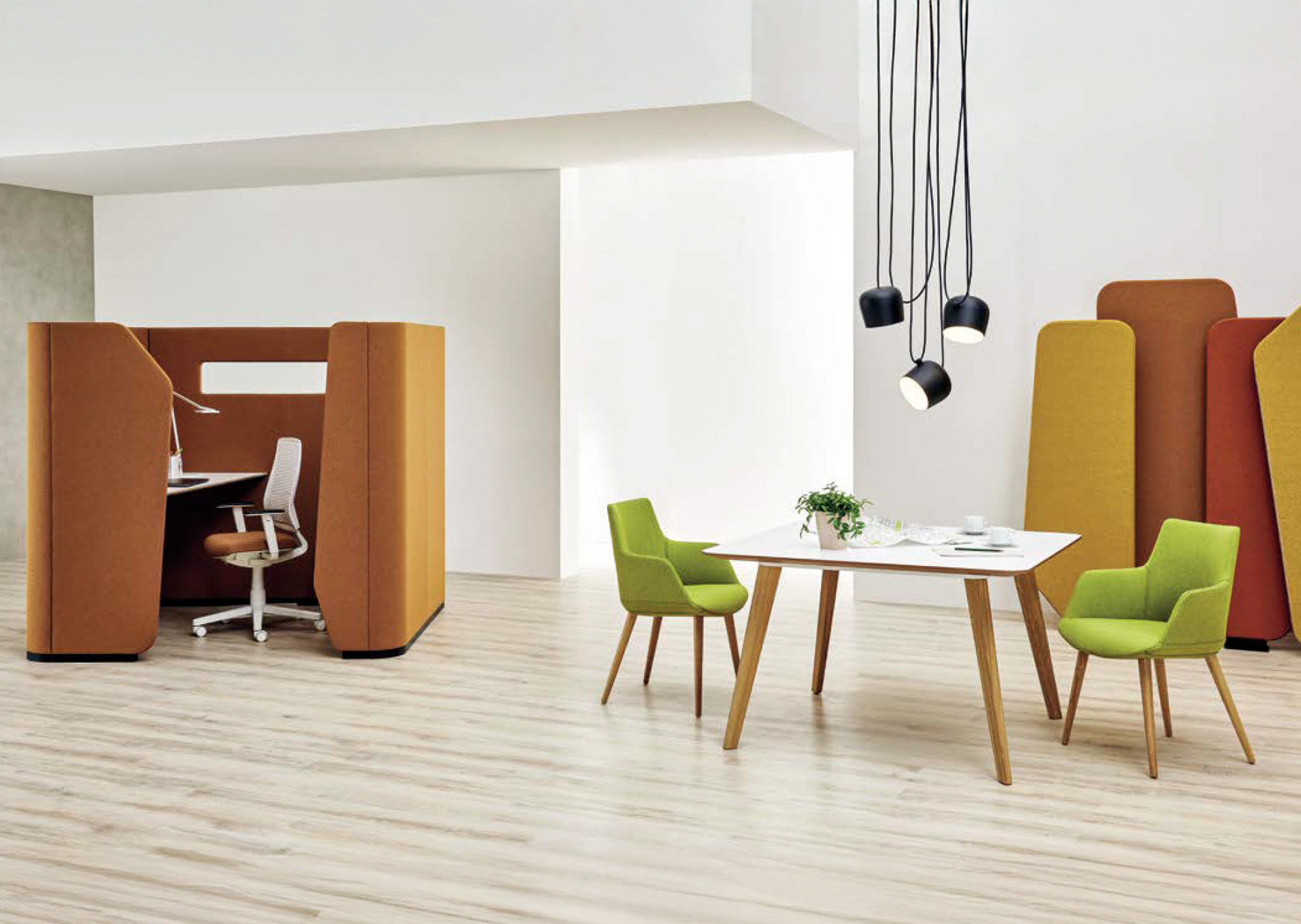
Screen Panels system in cubicle and free-standing versions
On the left: Asterisco APP desk and First chair
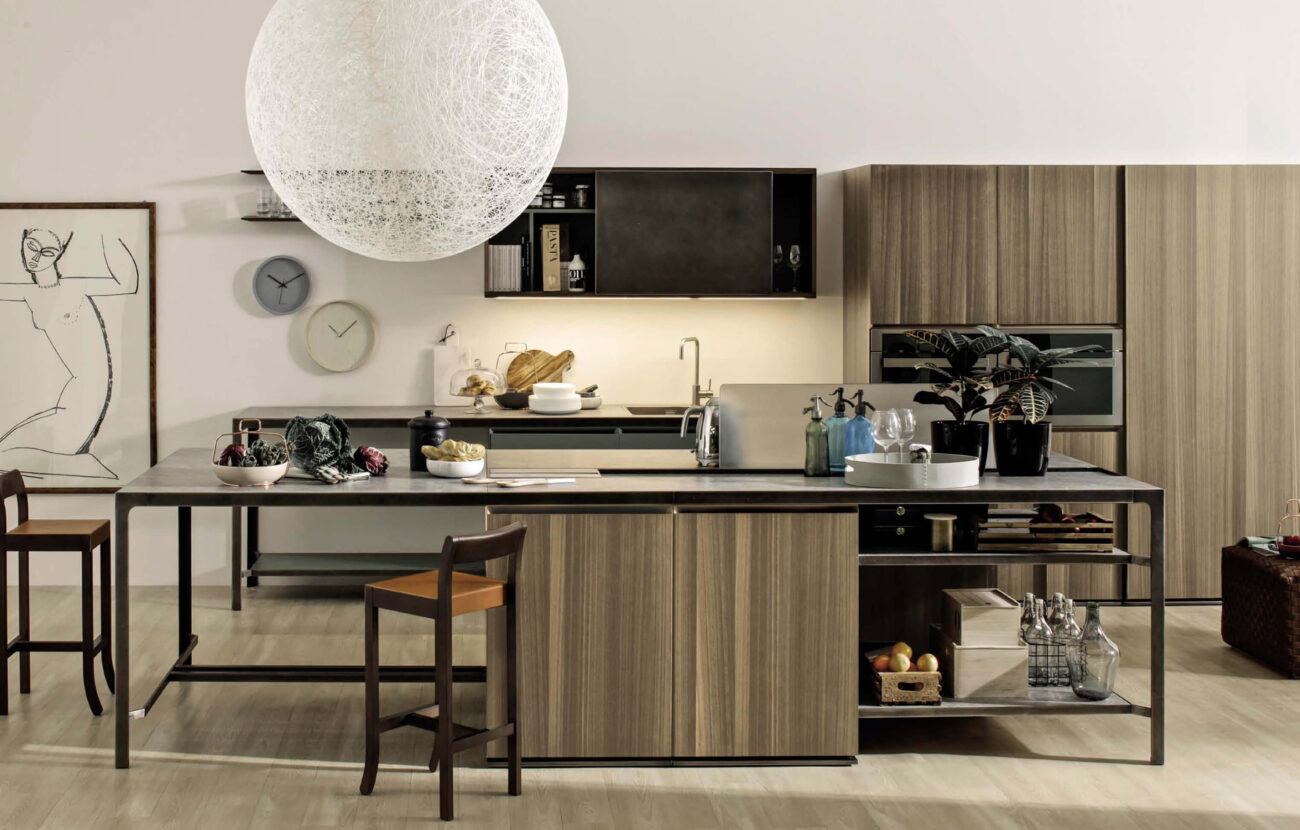
Coffice Party Island, a kitchen system used both in residential and workplace settings
Smart Office _ Collaborative Room
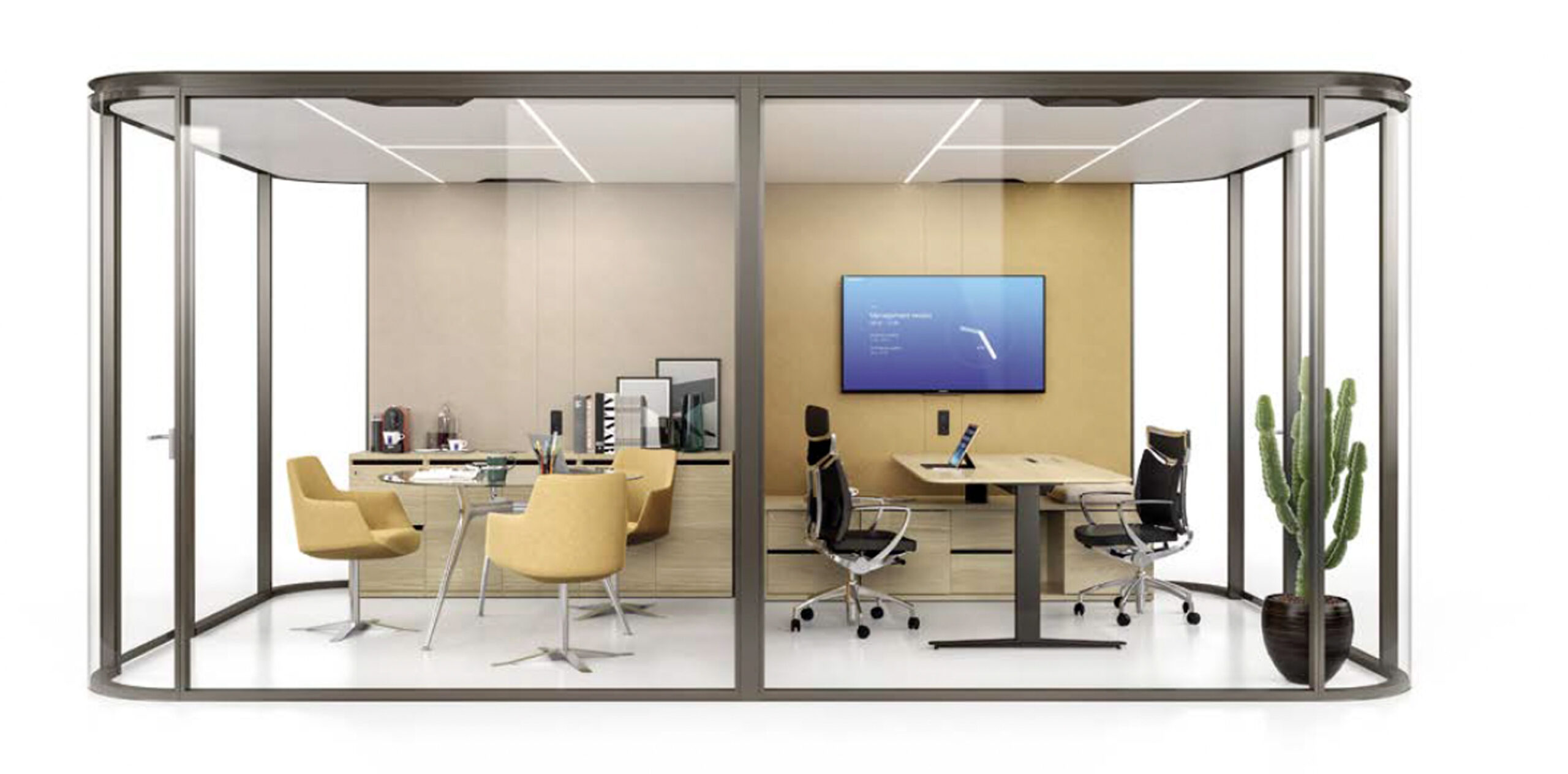
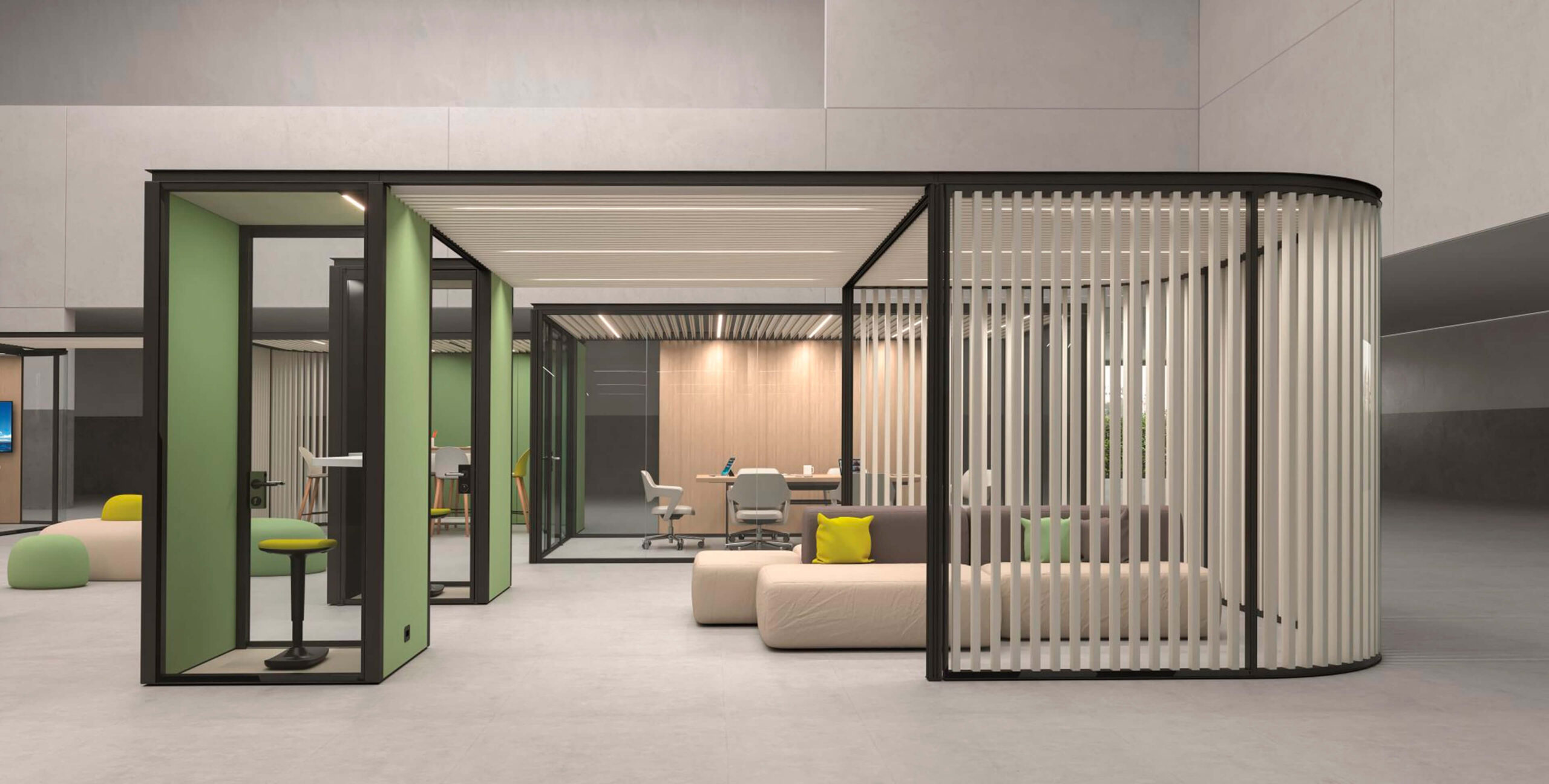
The eternal duality between open and closed spaces is addressed with the introduction of the Collaborative Room, the result of 3–4 years of research, providing a functional solution to the lack of privacy in open offices. Built on the principle that everything at Estel must first be beautiful, this pod, available in various sizes, combines design with multiple technical functions: from acoustic absorption to sanitized air circulation, as well as lighting and connectivity to power and data networks. A private space designed to host meetings for up to ten people, featuring large glass panels, a waiting area, a break area, and a printing service, including the integration of an executive office with a workstation.
Partition Walls: Between Design and Performance
Estel has strengthened its expertise in glass partitions with advanced solutions, from the 4×4 system of the 1990s to the latest 30-60-90 models, ensuring acoustic insulation, flexibility, and aesthetics for modern environments. Thanks to technological innovation, Estel today offers state-of-the-art modular systems for workplace design.
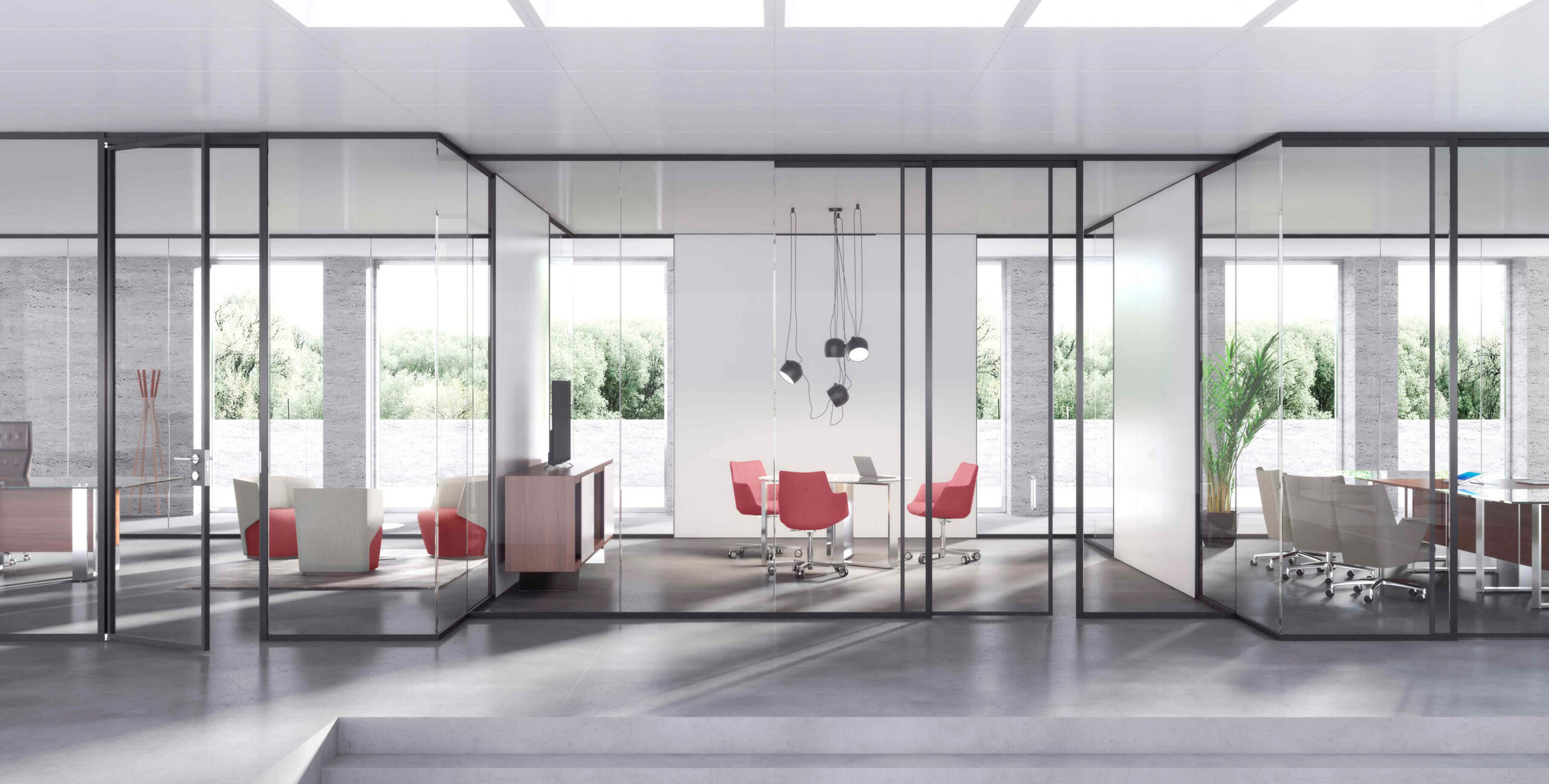
3-30 wall with hinged and sliding framed glass doors
Today…
Campiello
Estel’s iconic Collaborative Room model is enhanced with Campiello, a slatted system that creates a unique visual and spatial division, playing with the see-through concept. Campiello enables flexible interaction between spaces thanks to its versatile use: panels can be mounted vertically to form walls or horizontally to create ceilings with Terrace slats. The result is a dynamic, multifunctional environment that adapts to work and creative needs, defining hybrid areas—between formal and informal—ever more requested by space planners.